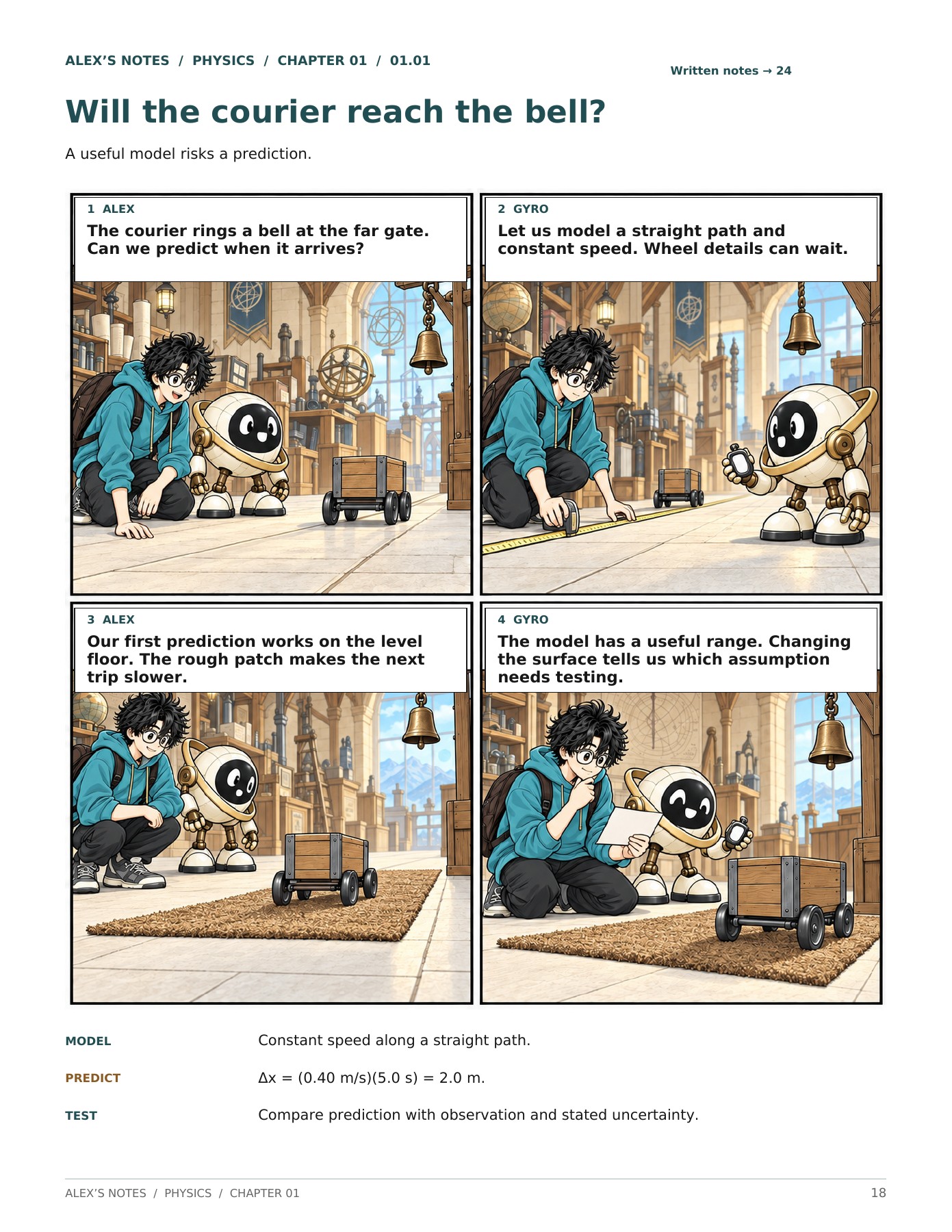
Chapter 01
Measurement and models
State testable predictions and model limits. Convert units and check dimensions. Report uncertainty honestly and interpret graphs. Estimate scale before trusting a calculation.
Physics, illustrated
Explore motion, forces, energy, waves, and electricity with Alex and Gyro through experiments across the Unfinished Atlas.
Inside the download
An illustrated high-school Physics course with muted storybook color, precise diagrams, worked examples, practical investigations, practice questions, and explained answers. Begin with observation, test a prediction, and connect the result to a general idea. Chapters 01–17 form the core course; Chapter 18 is an introductory modern-physics extension. Basic algebra is assumed, with a mathematics bridge for the additional skills.
The Unfinished Atlas · Muted storybook color edition
Intended level: High-school, algebra-based Physics. Browse the samples to match the topics to your class.
Read on screen or print the chapters you need.
Read it. Try it.
Read the first illustrated story page from any chapter, then explore the ideas in the complete course’s notes and worked examples.
18 chapters · one free sample page from each
Chapter 01
State testable predictions and model limits. Convert units and check dimensions. Report uncertainty honestly and interpret graphs. Estimate scale before trusting a calculation.
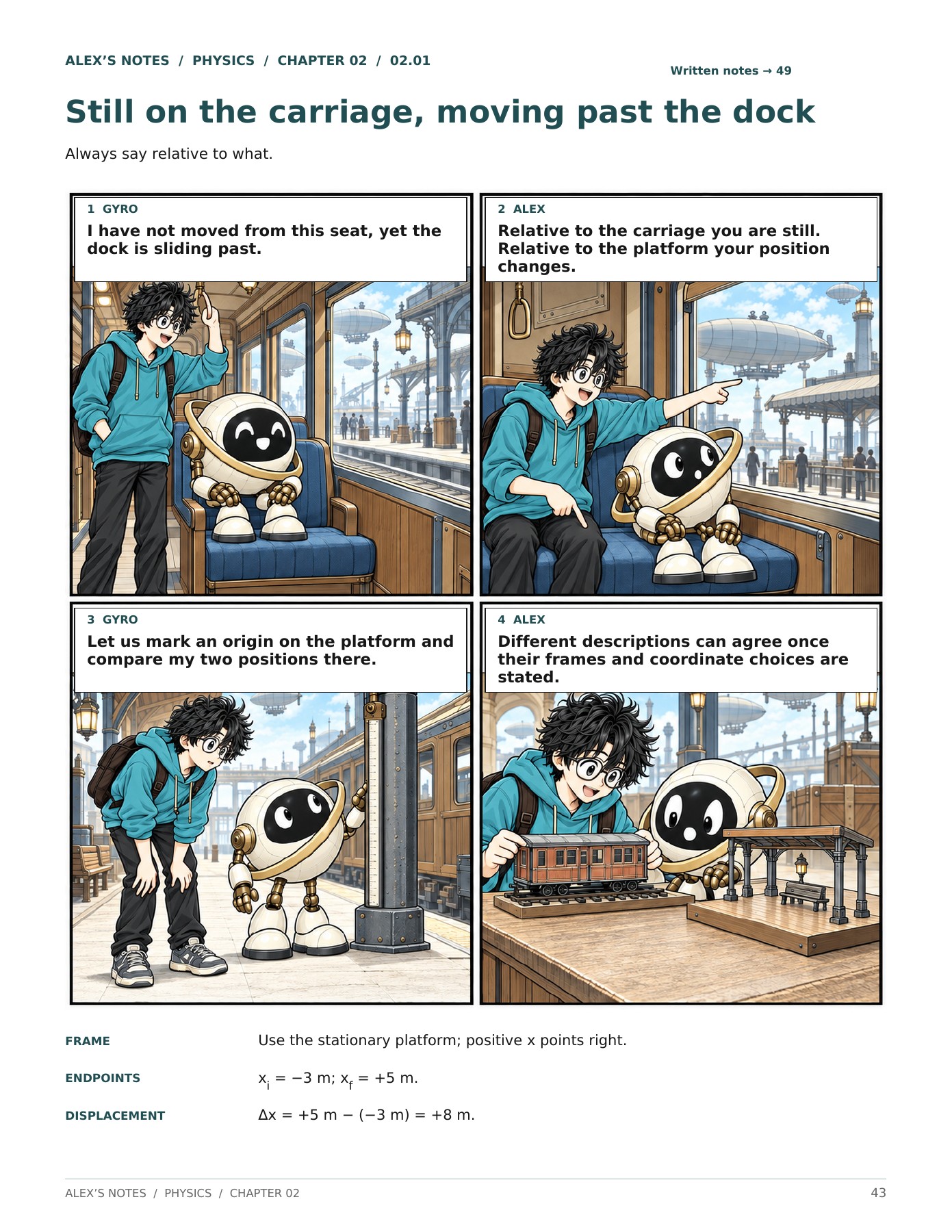
Chapter 02
Choose frames and coordinate directions. Distinguish distance, displacement, speed, and velocity. Read position slopes and velocity areas. Translate words, graphs, and tables consistently.
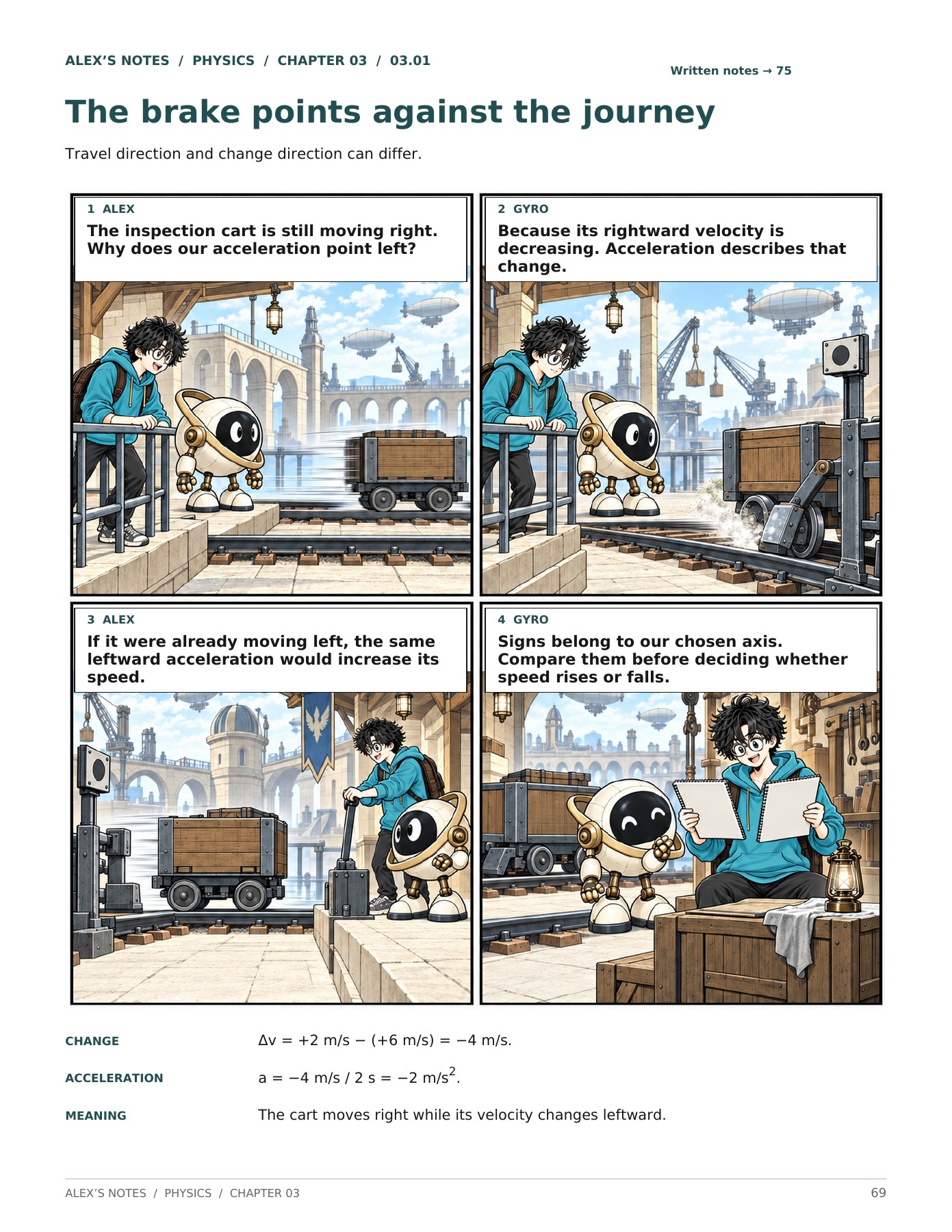
Chapter 03
Calculate signed acceleration. Use graph area and constant-acceleration equations. Divide changing conditions into stages. Explain gravity and turning points without confusing velocity with acceleration.
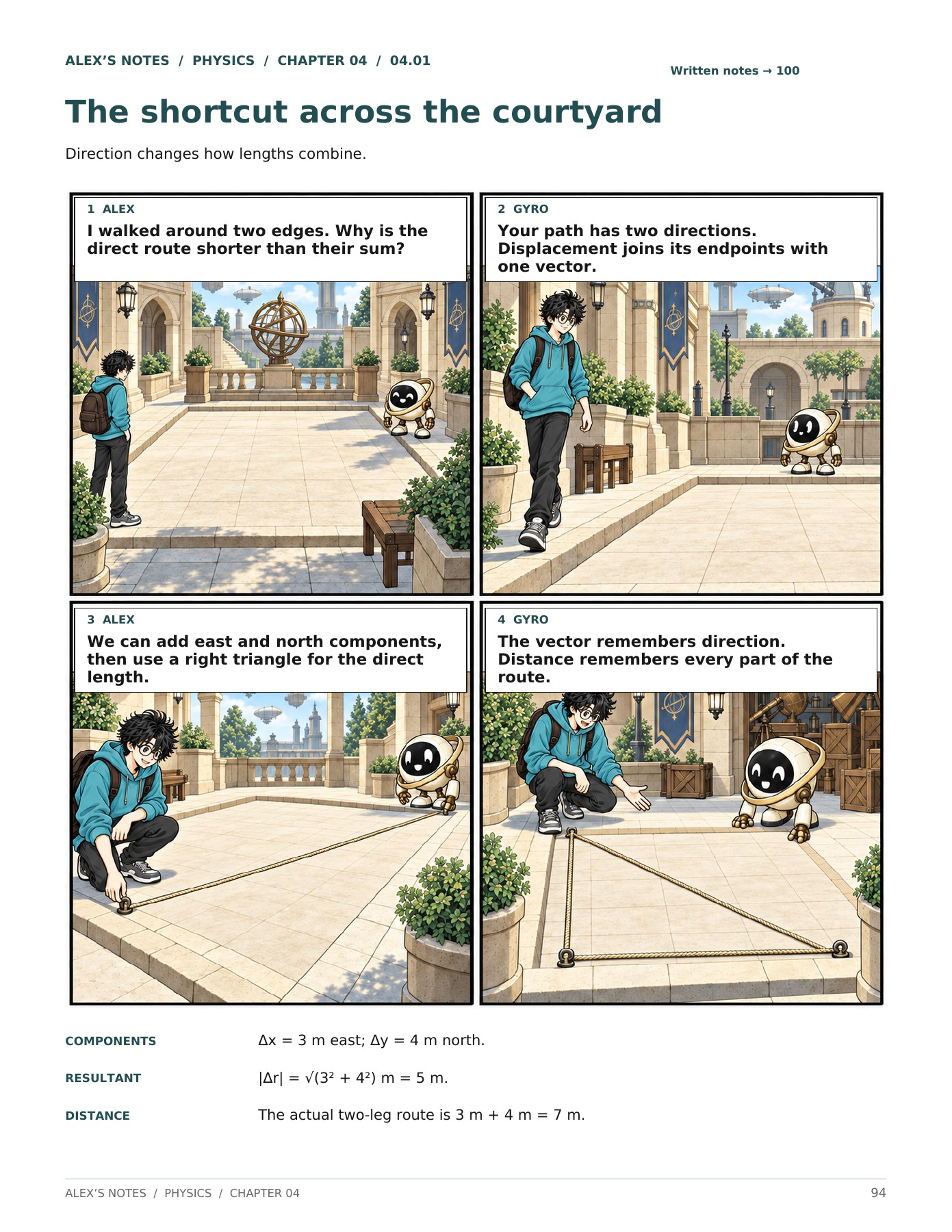
Chapter 04
Add vectors and recover their magnitude and direction. Use sine, cosine, and tangent with stated axes. Solve horizontal and vertical motion with one shared time. Check landing heights and model assumptions.
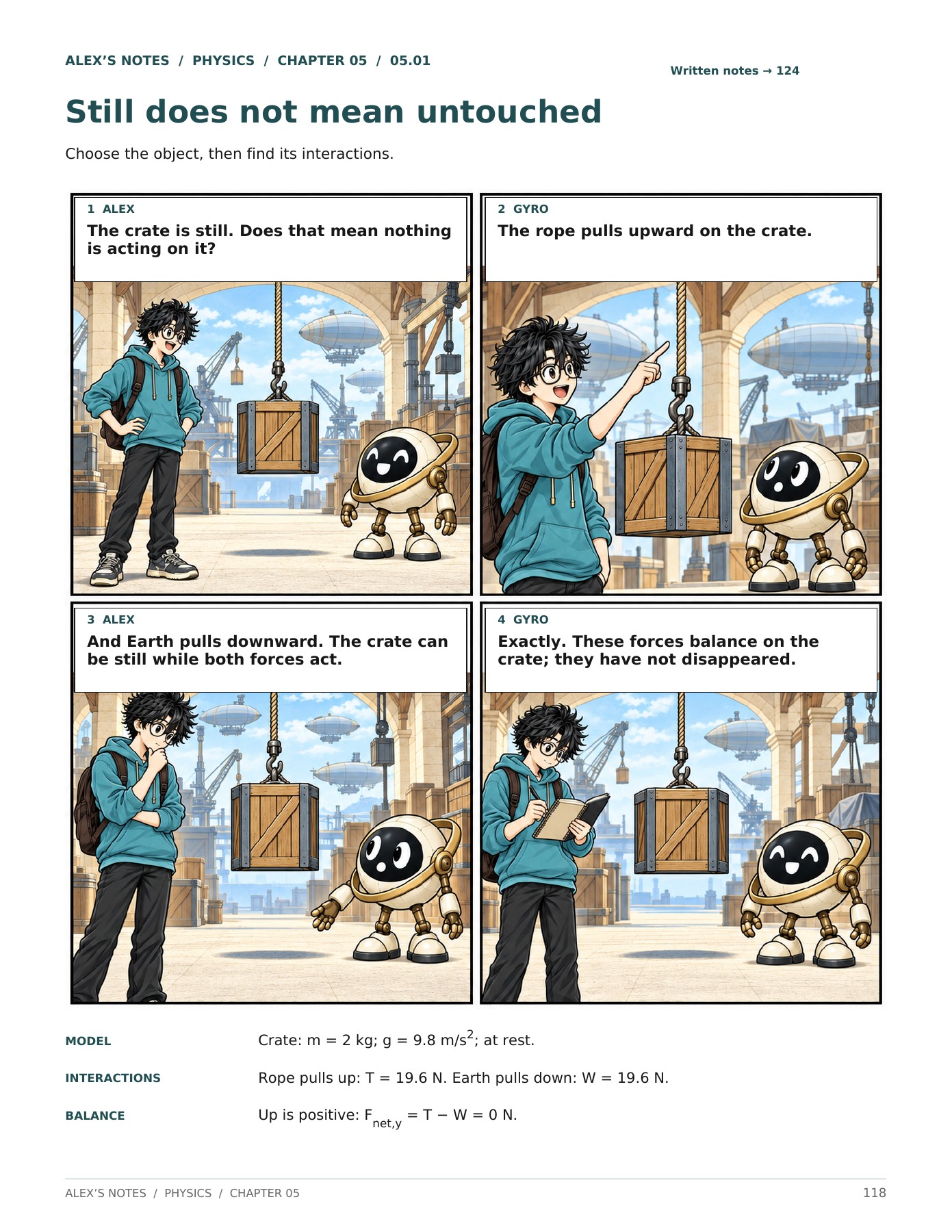
Chapter 05
Identify the system, frame, interaction partners, and external forces. Distinguish balanced forces, constant velocity, and acceleration. Use net force and total mass to predict acceleration. Separate mass, gravitational weight, and normal force. Keep third-law forces on their different recipient objects.
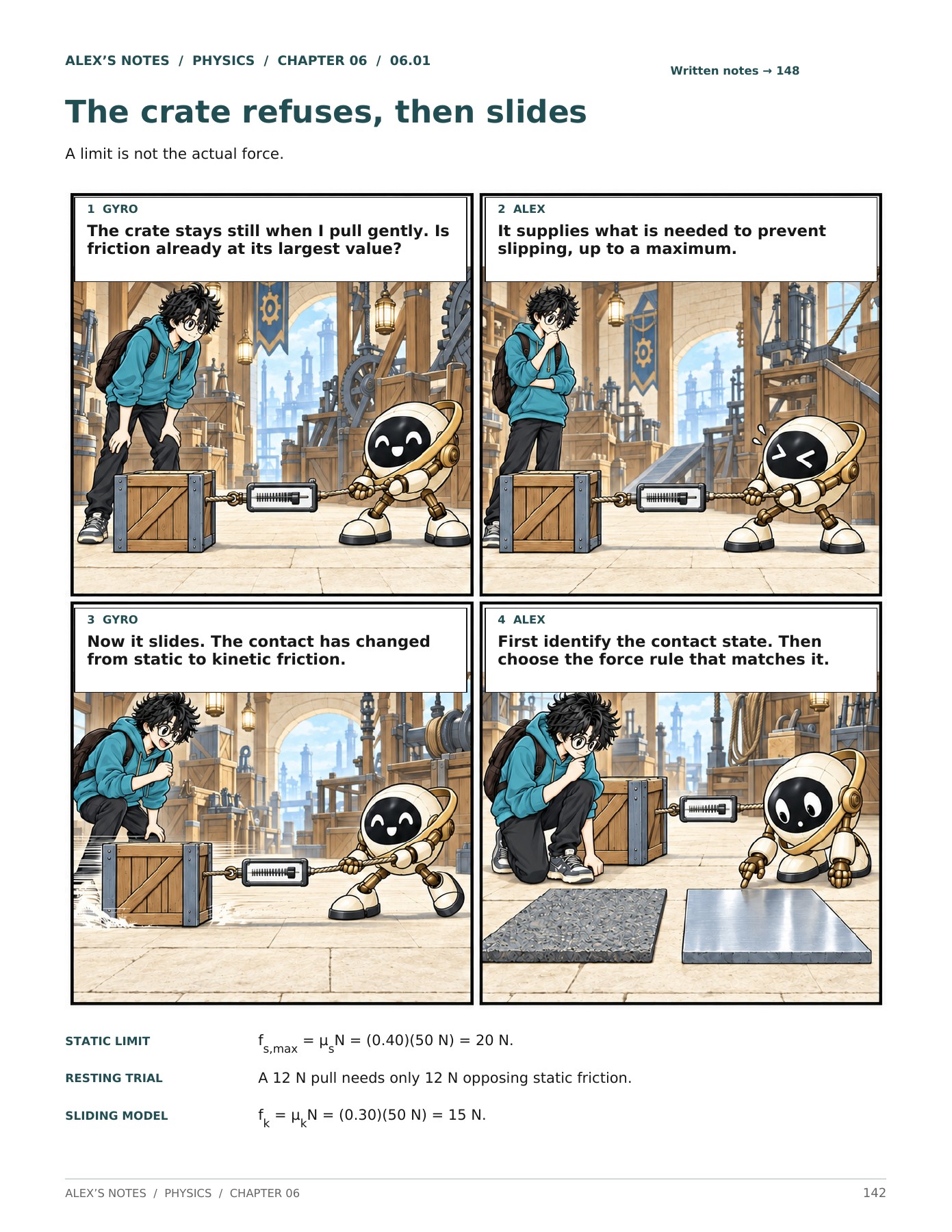
Chapter 06
Distinguish friction states and limits. Resolve incline and angled-pull forces. Analyze connected objects and springs. Explain terminal motion and detect impossible contact assumptions.
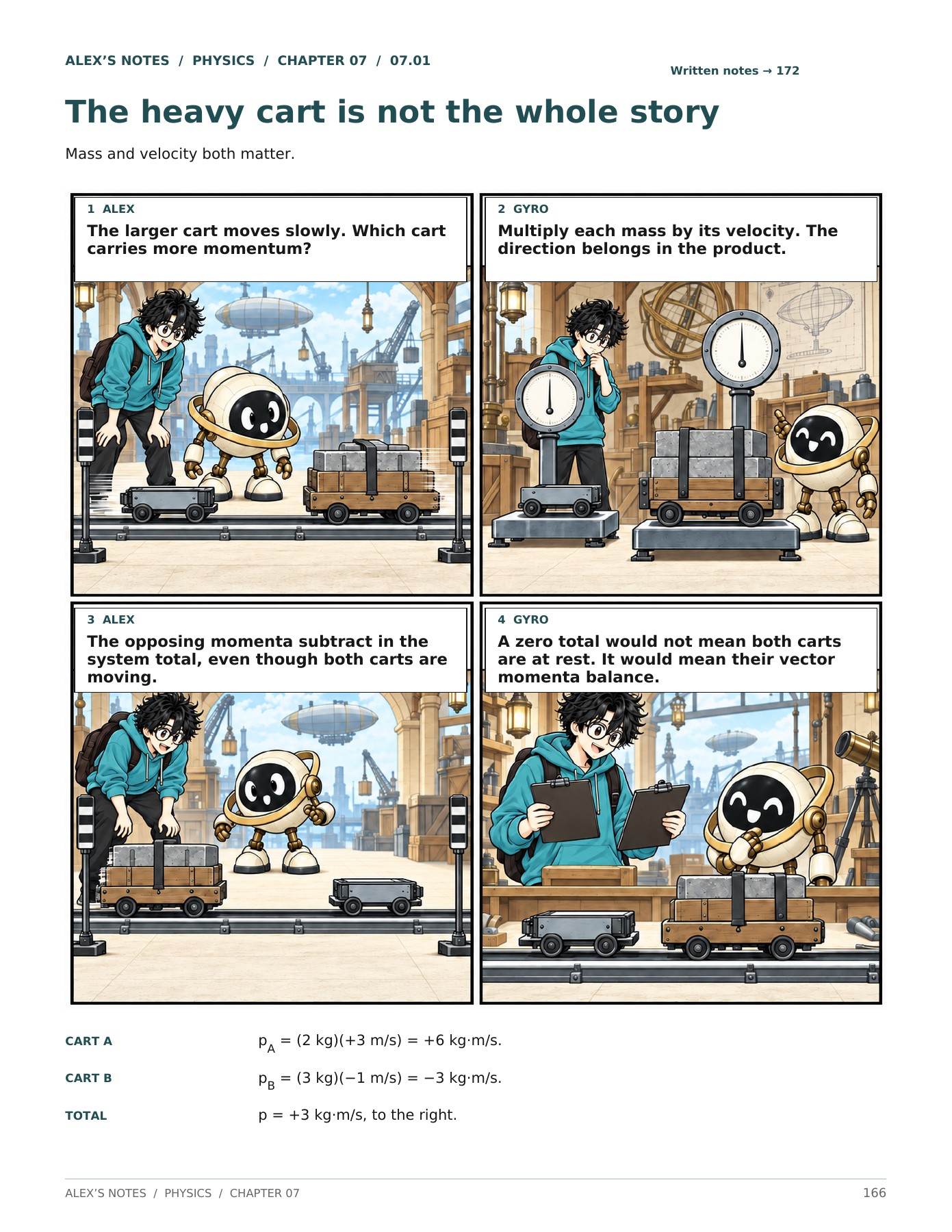
Chapter 07
Calculate vector momentum and impulse. Check when external impulse is negligible. Solve sticking collisions and recoil. Conserve momentum components in two dimensions.
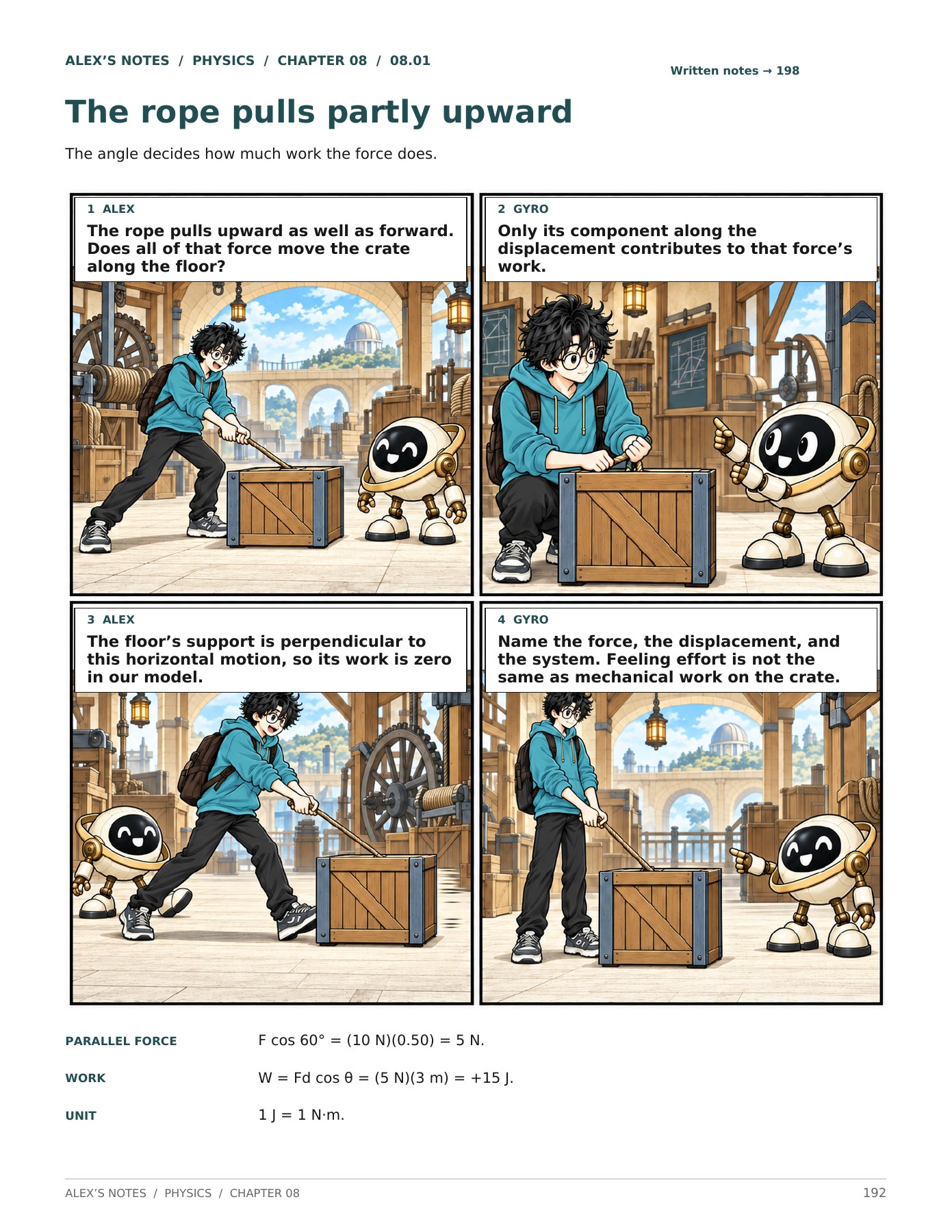
Chapter 08
Calculate work and kinetic-energy changes. Define gravitational and spring-energy systems. Account for dissipation and boundary transfers. Explain simple-machine tradeoffs, efficiency, and power.
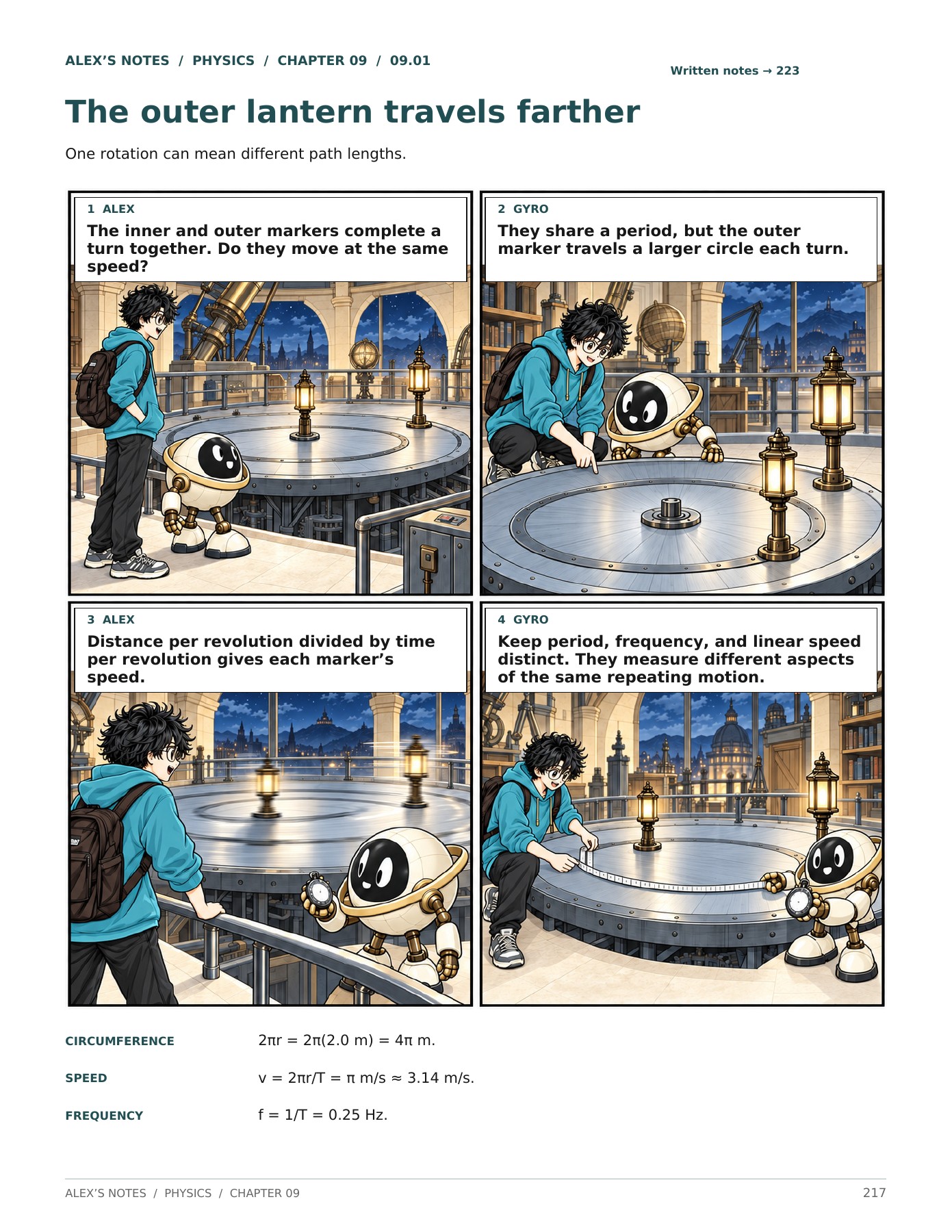
Chapter 09
Relate period, frequency, and circular speed. Find inward acceleration and identify its physical force source. Use inverse-square gravity with center distances. Explain circular orbit and apparent weightlessness.
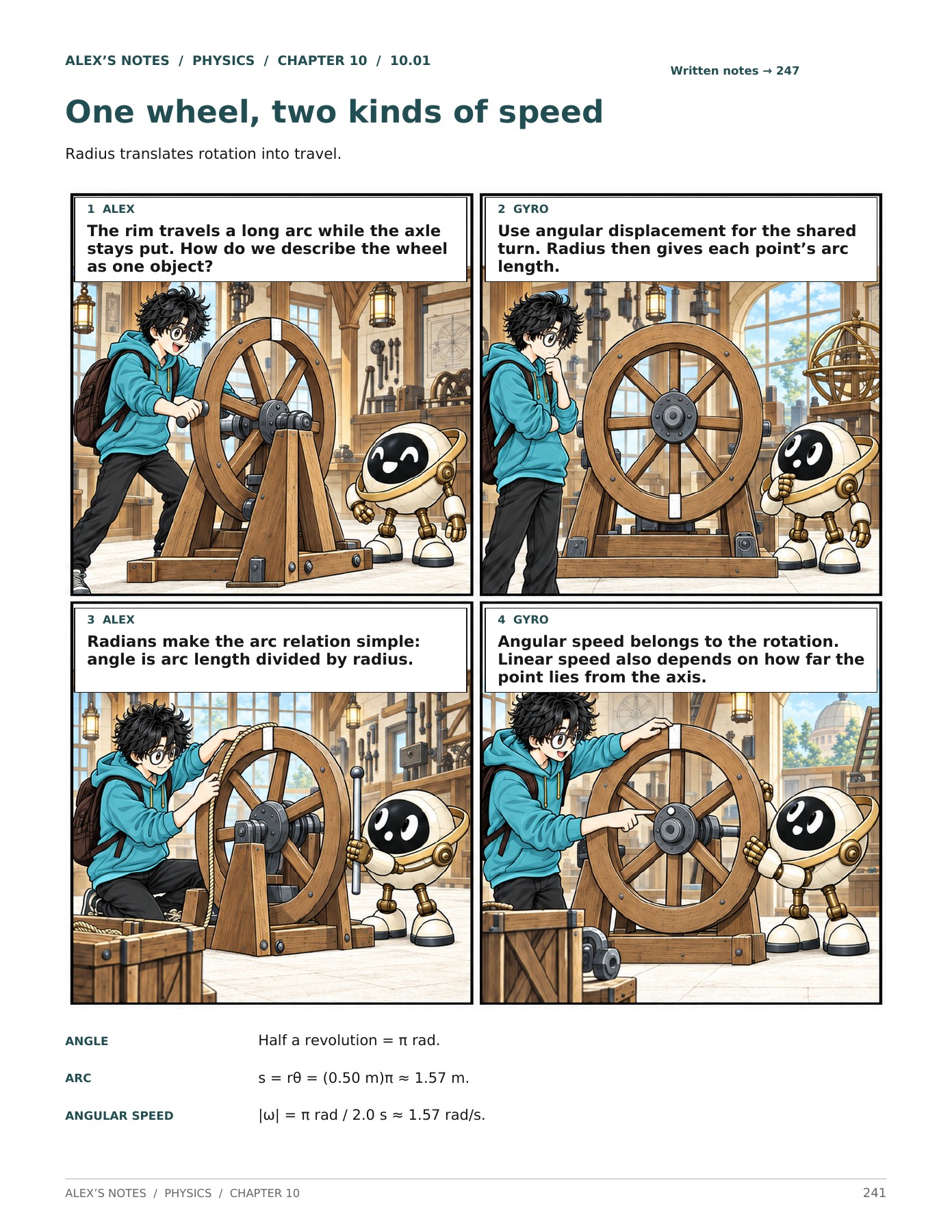
Chapter 10
Use radians and connect angular with linear motion. Calculate torque using a perpendicular lever arm. Apply supplied inertia formulas and equilibrium conditions. Account for rolling energy and angular momentum.
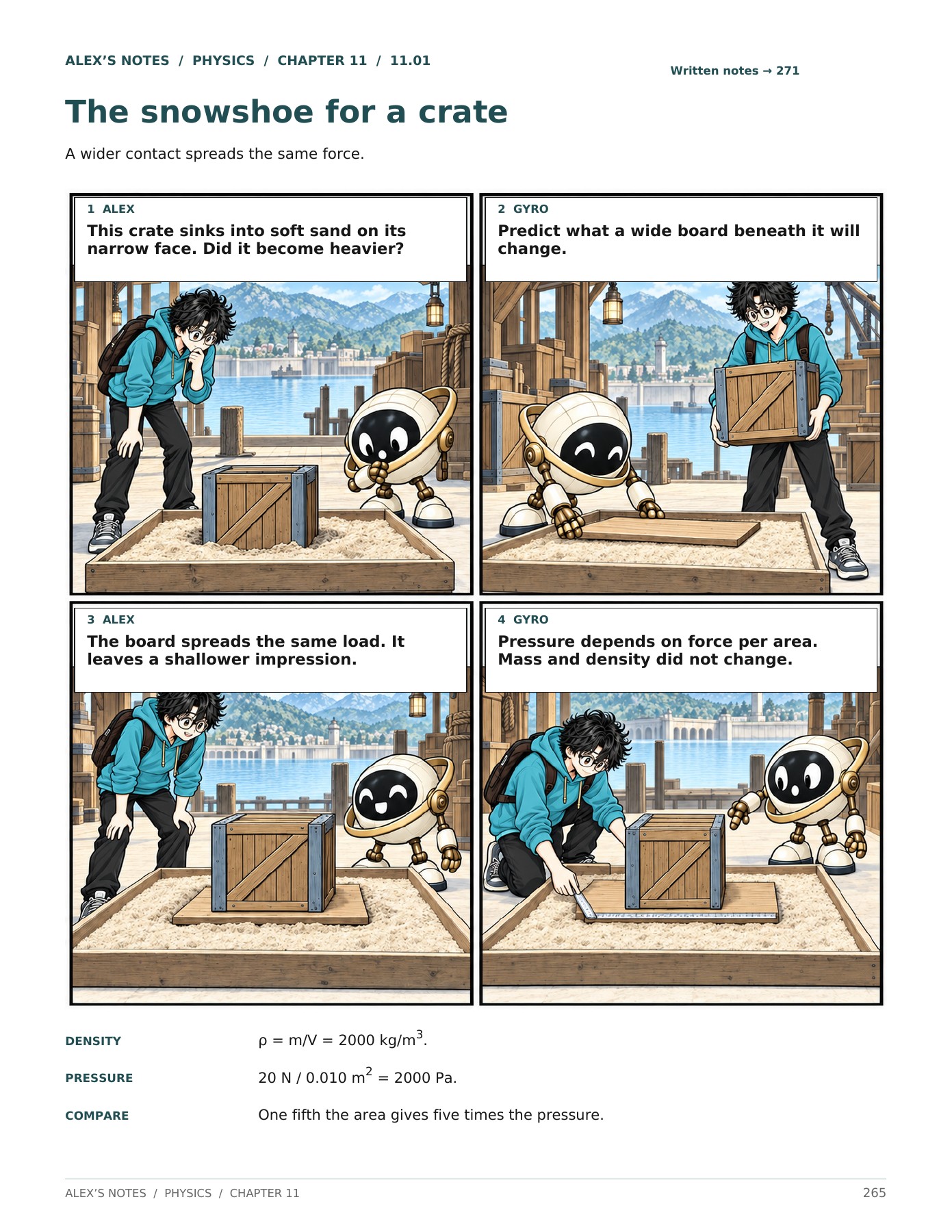
Chapter 11
Relate density and pressure to mass, volume, force, and area. Calculate pressure differences within a stationary liquid. Apply Pascal’s principle and volume conservation to ideal hydraulics. Use buoyancy to distinguish floating from sinking.
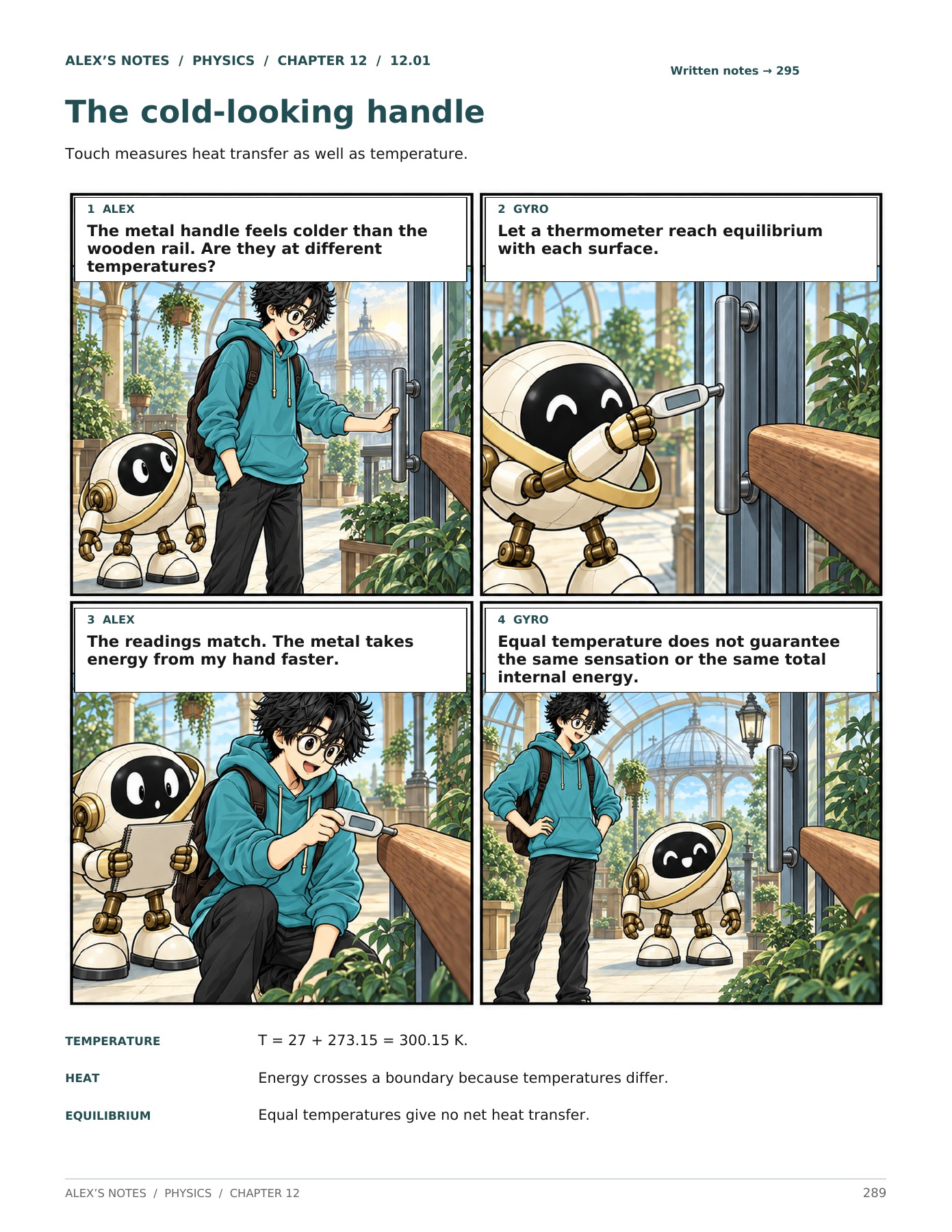
Chapter 12
Distinguish temperature, internal energy, and energy transferred by heat. Predict small thermal expansions using a supplied coefficient. Use specific heat and energy balance to predict temperature changes. Calculate energy for phase change at a fixed transition temperature.
Chapter 13
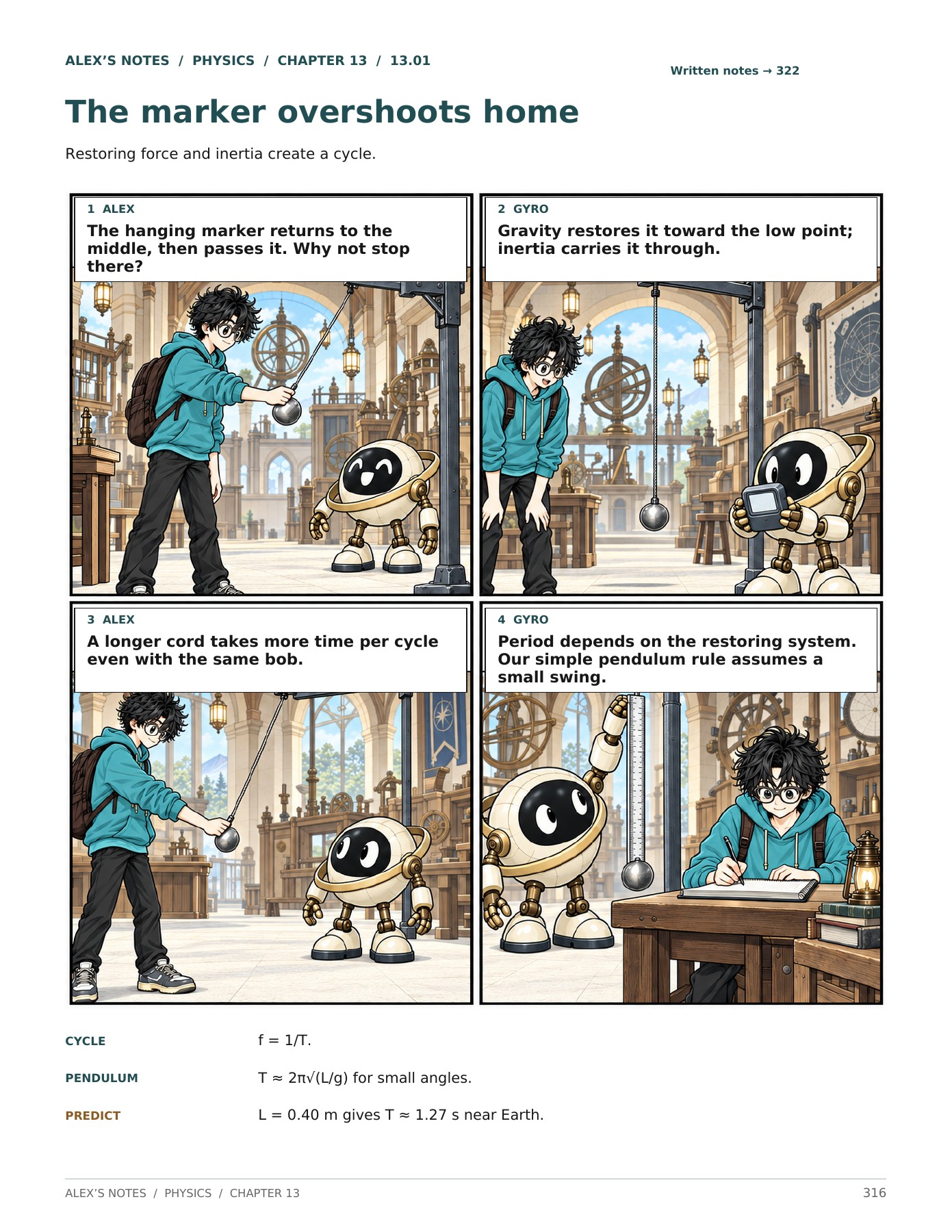
Relate period and frequency and identify a restoring effect. Relate wave speed, wavelength, and frequency. Use superposition to predict temporary interference. Predict standing-wave frequencies for a string fixed at both ends.

Chapter 14
Locate visible light within the electromagnetic spectrum and relate wavelength to frequency. Apply reflection and locate a plane mirror’s virtual image. Apply Snell’s law and identify total internal reflection. Distinguish real and virtual images formed by lenses and curved mirrors.

Chapter 15
Explain charging using charge conservation and mobile electrons. Calculate electric force between point charges. Use electric fields to predict forces and combine contributions. Describe electrostatic equilibrium and distinguish field from potential.

Chapter 16
Relate current to charge flow and identify a complete circuit. Use Ohm’s law for a component whose temperature and resistance are fixed. Calculate series resistance, current, and voltage drops. Calculate parallel currents and equivalent resistance.
Chapter 17
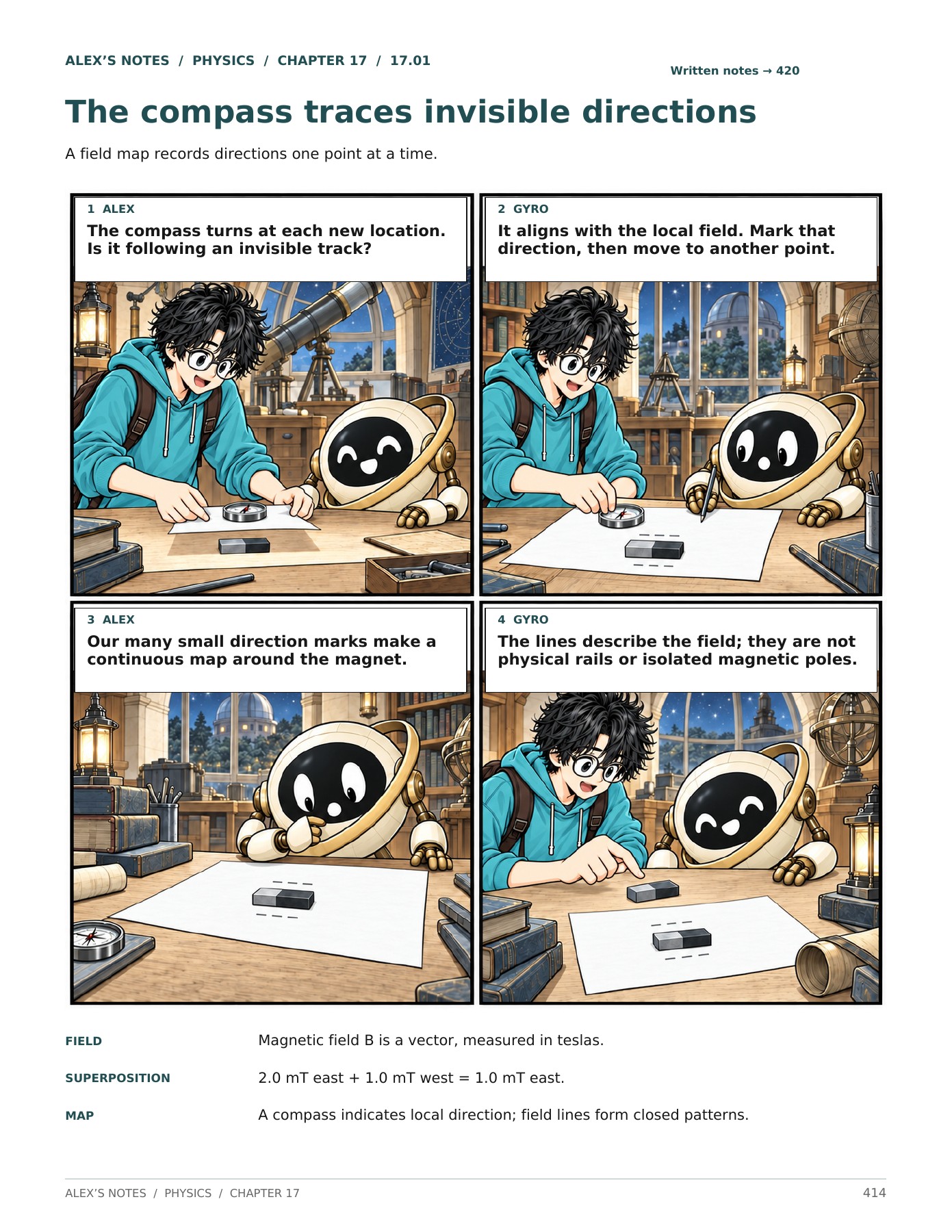
Interpret magnetic field maps and compass directions. Predict magnetic-force magnitude and direction for a moving charge. Relate force on a wire to magnetic field and current. Explain electromagnets and apply an ideal solenoid model.
Chapter 18
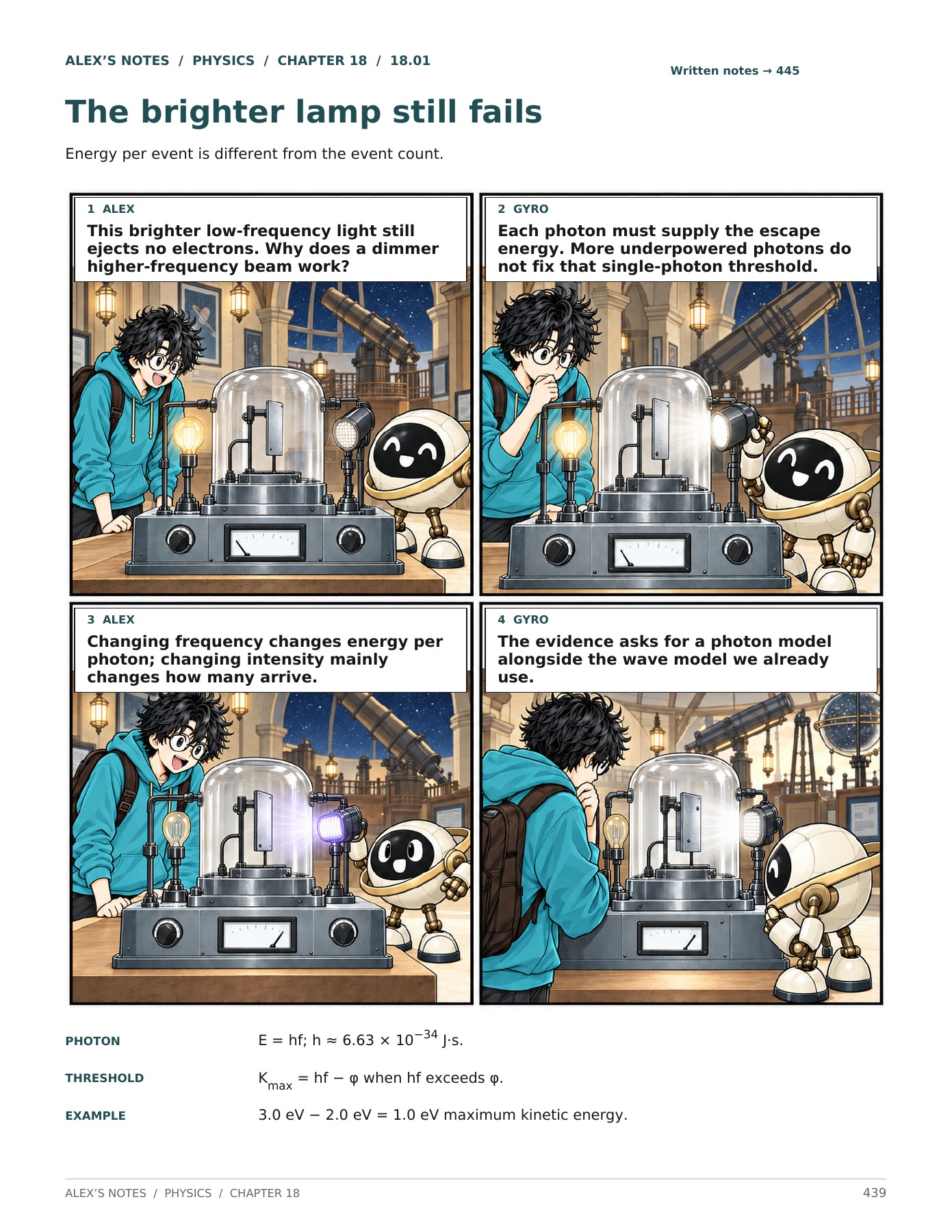
Use photon energy to explain a photoelectric threshold. Relate discrete atomic transitions to photon spectra. Track proton number and nucleon number in radioactive transformations. Use half-life to predict expected remaining nuclei.
No chapters match that search. Try another topic or choose “All topics.”
The complete course
The full collection and separate chapter PDFs, together in one download purchase.
Get Physics · 14.99 USDSecure checkout and digital delivery through Payhip.
Read the free PDF sampler
No checkout required.