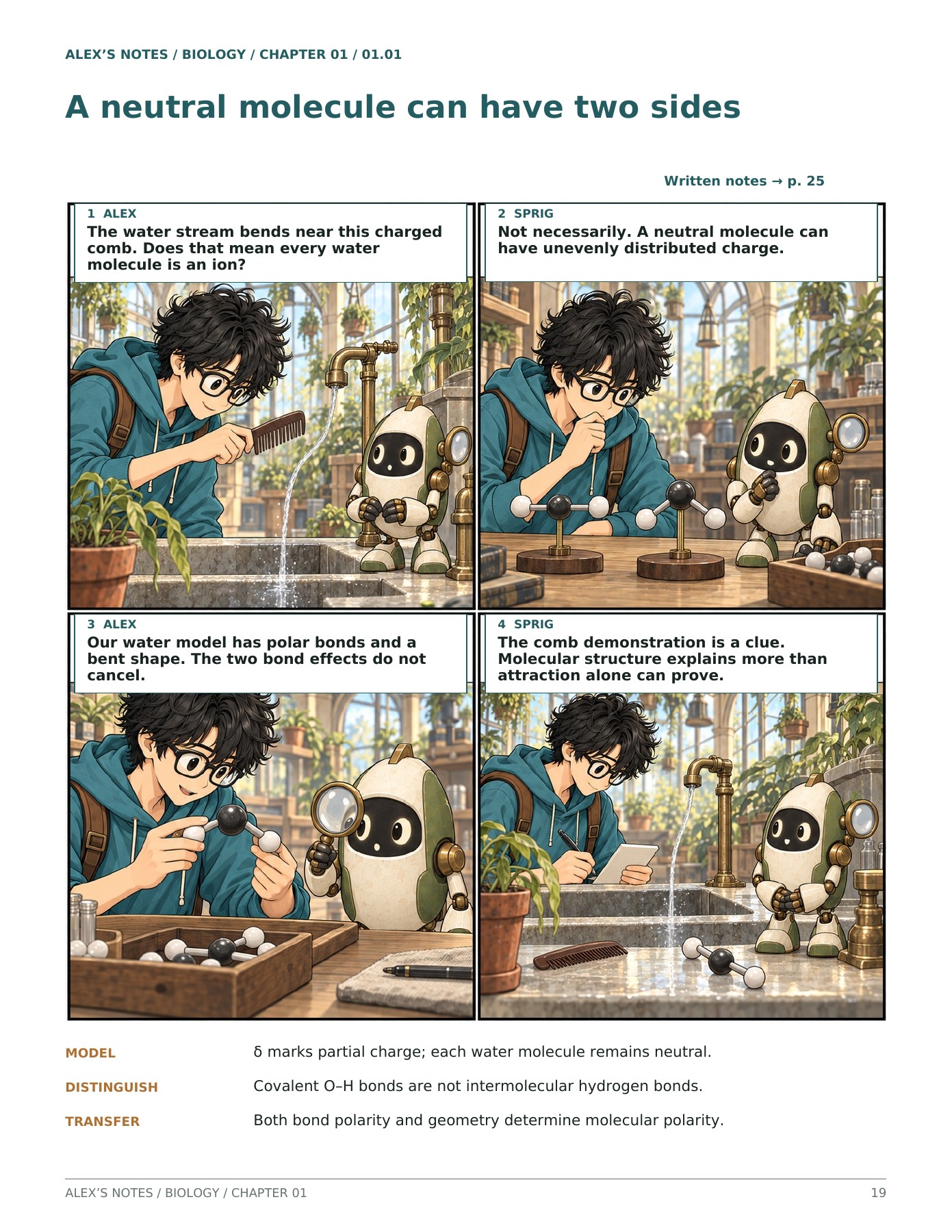
Chapter 01
Water and molecular interactions
Connect water’s structure to its interactions and visible properties. Trace how elements and aqueous interactions support biological organization. Test molecular explanations using controlled comparisons.
Biology, illustrated
Investigate living systems with Alex and Sprig, from molecular interactions and cells to inheritance, evolution, and ecosystems.
Inside the download
An independent AP-aligned study companion with muted-color stories, precise scientific diagrams, complete explanations, investigations, and original practice. Each lesson moves from observation and prediction to evidence and explanation, with clear model limits. Includes a separate AP practice companion with an original full exam and explained answers. AP is a trademark of College Board, which is not affiliated with and does not endorse this guide.
AP Biology Edition · The Unfinished Atlas · Muted storybook color
Intended level: AP Biology; introductory biology and chemistry assumed. Browse the samples to match the topics to your class.
Read on screen or print the chapters you need.
Read it. Try it.
Read the first illustrated story page from any chapter, then explore the ideas in the complete course’s notes and worked examples.
18 chapters · one free sample page from each
Chapter 01
Connect water’s structure to its interactions and visible properties. Trace how elements and aqueous interactions support biological organization. Test molecular explanations using controlled comparisons.
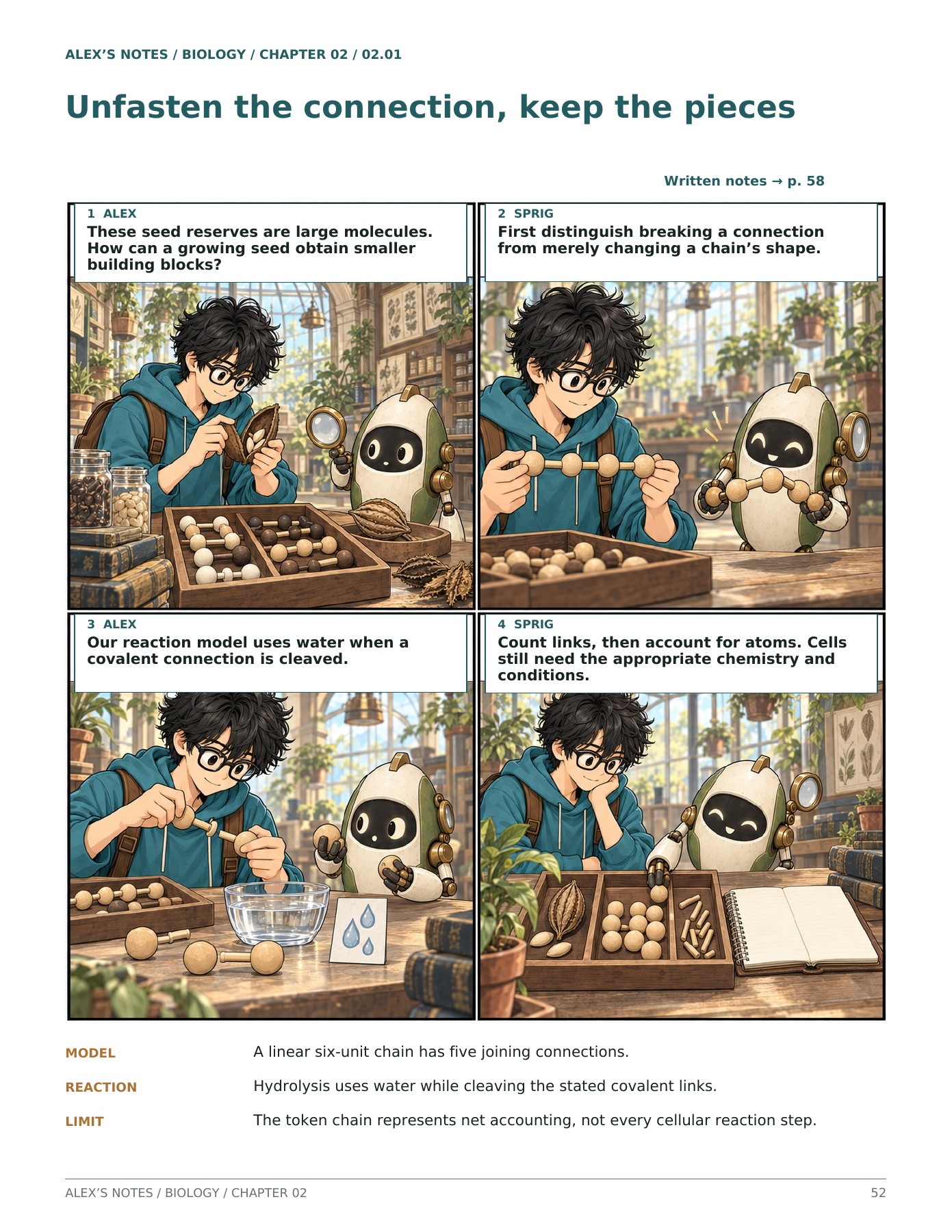
Chapter 02
Connect molecular building blocks, bonds, and three-dimensional structure. Distinguish carbohydrate, lipid, nucleic-acid, and protein functions. Predict how sequence, structure, and conditions affect biological molecules.
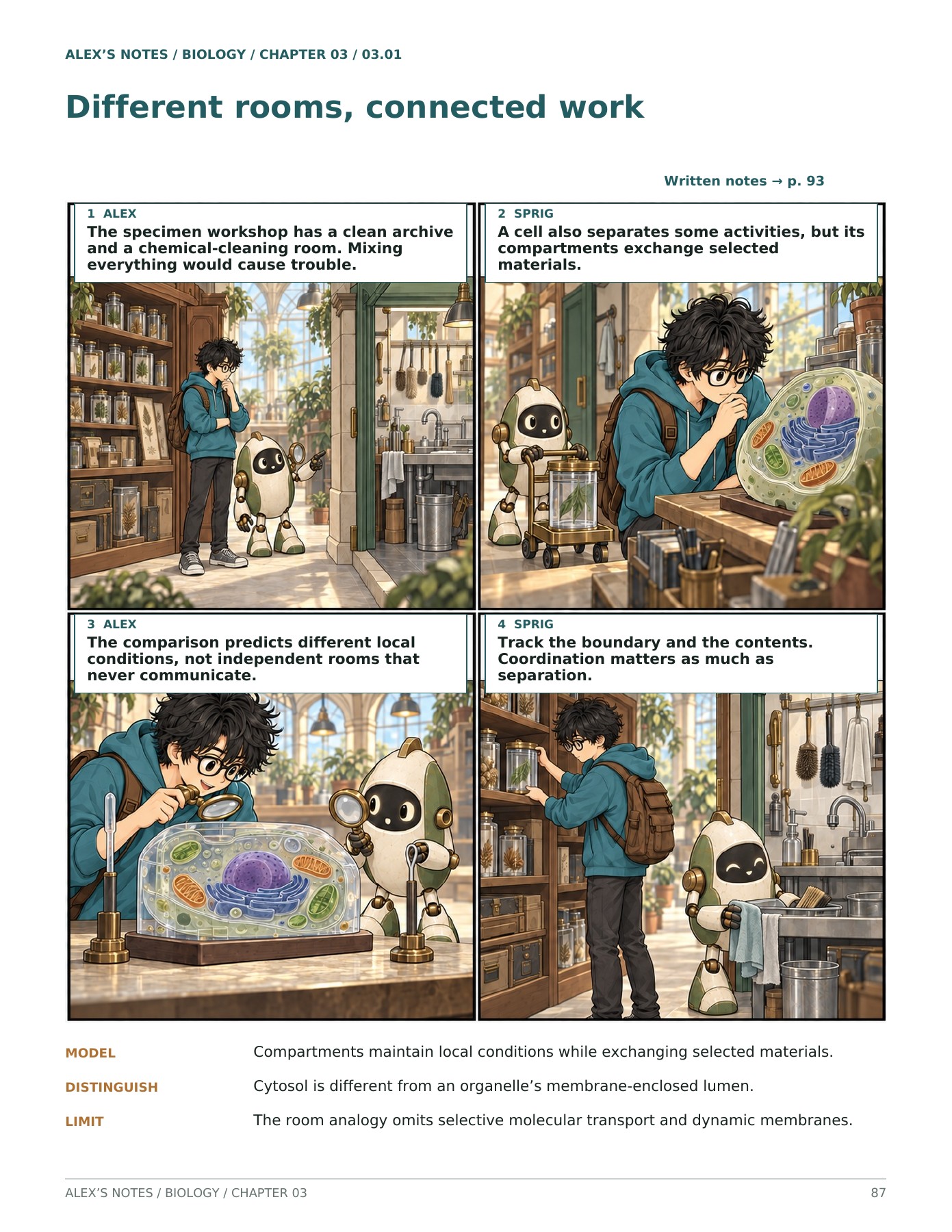
Chapter 03
Connect cell compartments and membrane pathways with their functions. Use scale and surface-area-to-volume ratios to explain cellular constraints. Compare cellular organization and evaluate evidence for endosymbiosis.
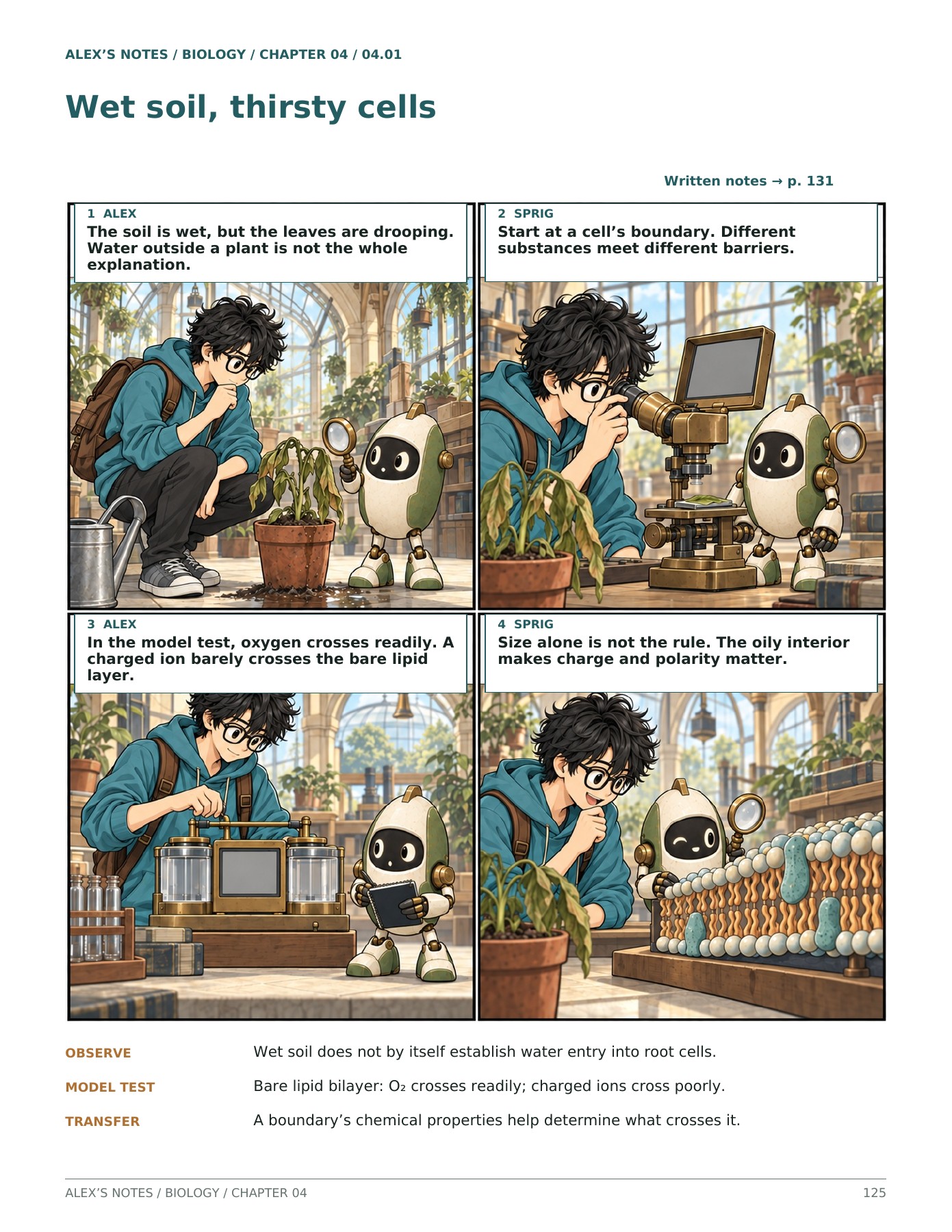
Chapter 04
Connect membrane structure with selective diffusion and water movement. Predict transport using gradients, pressure, permeability, and energy. Test exchange models with replicated data and track vesicular cargo.
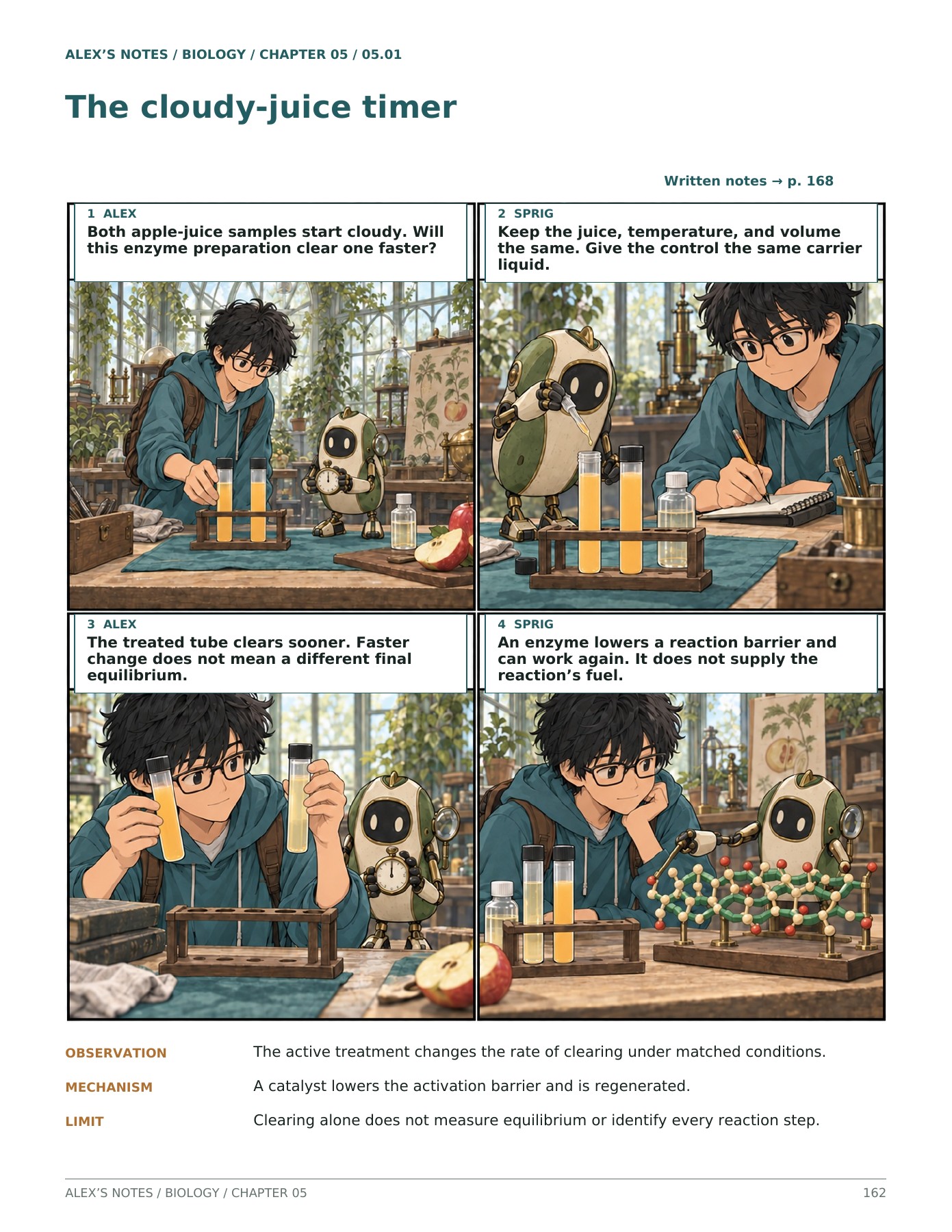
Chapter 05
Distinguish enzyme effects on reaction barriers from overall energy change. Predict how concentration, temperature, pH, and inhibitors alter activity. Explain metabolic control and ATP coupling using evidence and energy accounts.
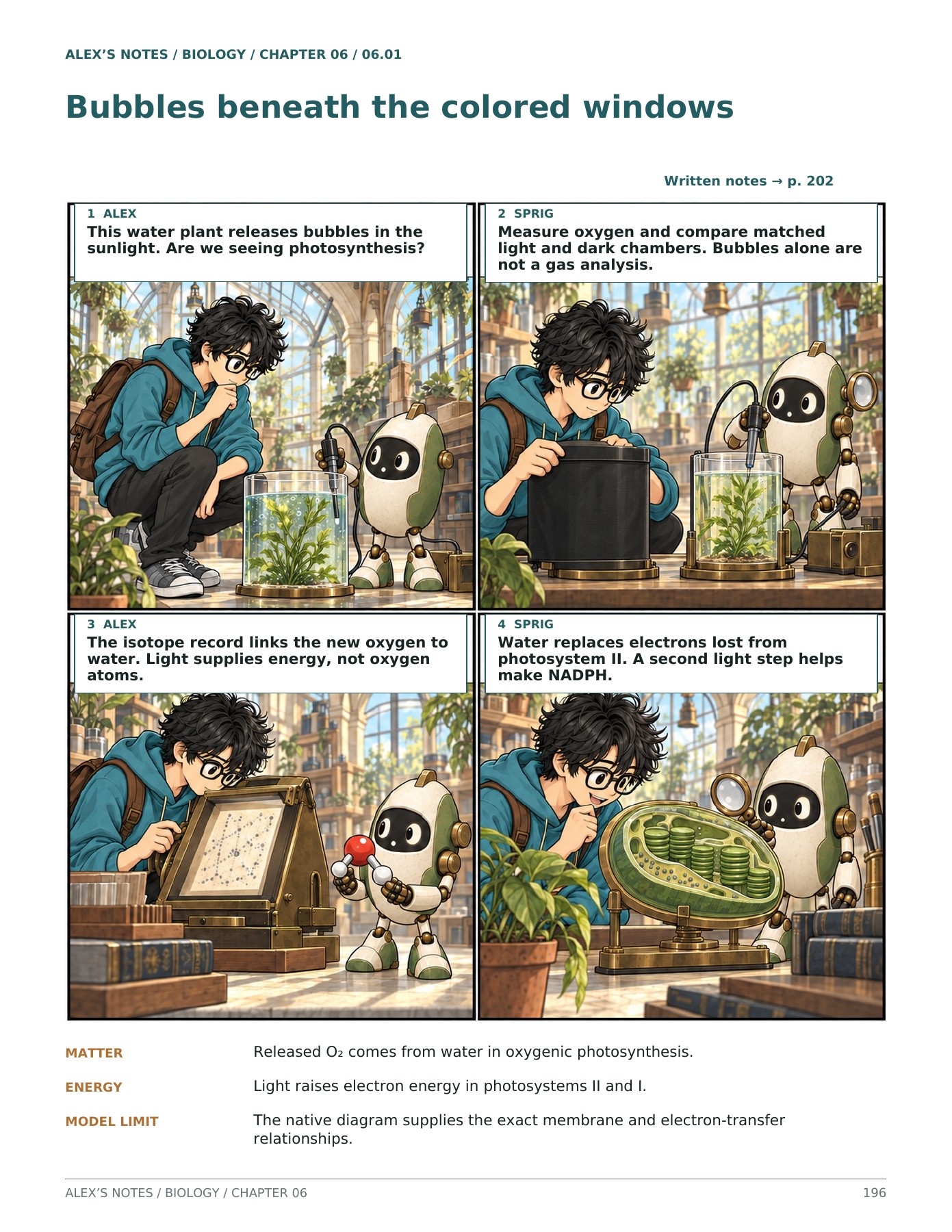
Chapter 06
Trace light, electrons, and carbon through photosynthesis. Explain ATP production through respiration and chemiosmosis. Compare metabolic pathways using atom, carrier, and energy accounts.
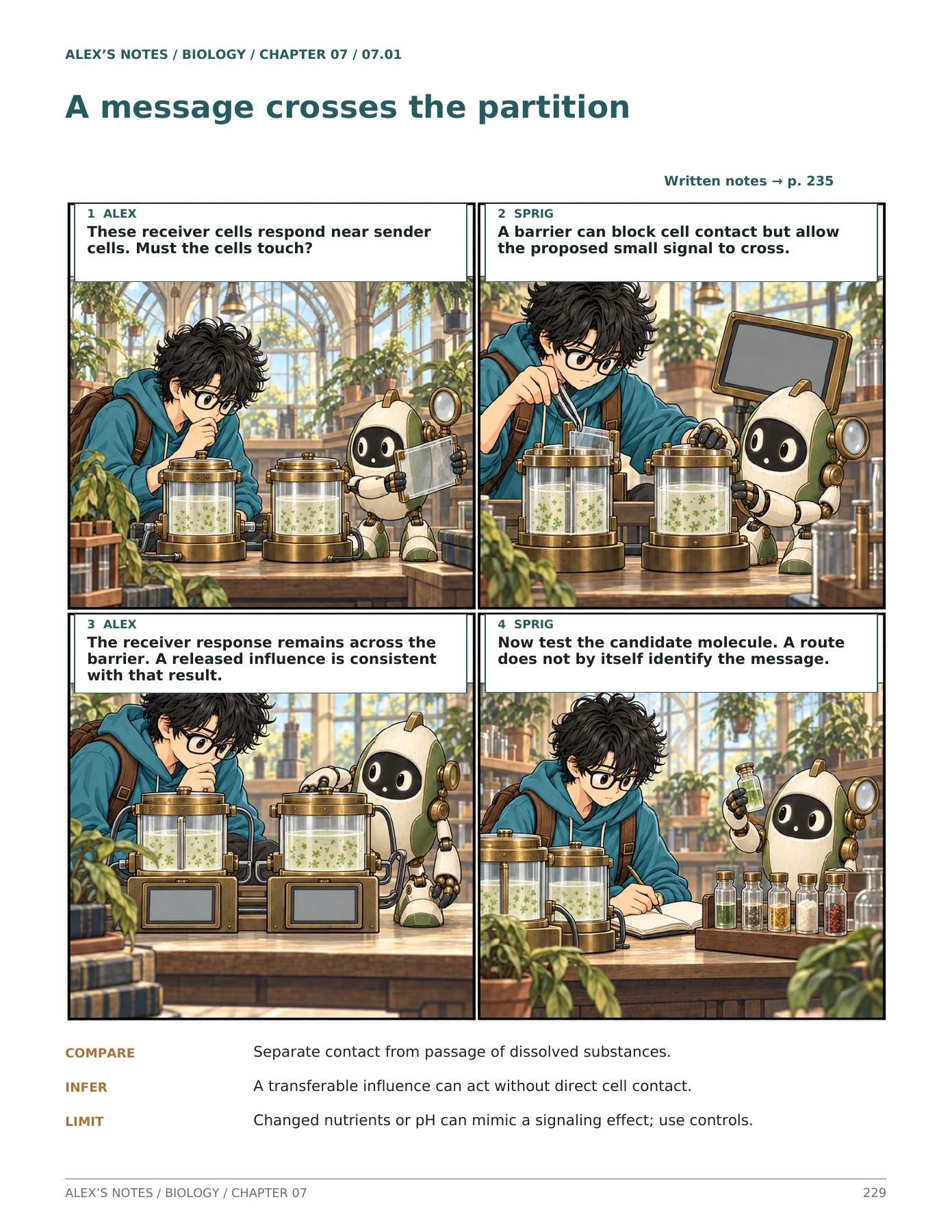
Chapter 07
Connect signaling routes, receptors, and target-cell responses. Trace amplification and test causal order within signaling pathways. Explain how feedback alters biological responses over time.
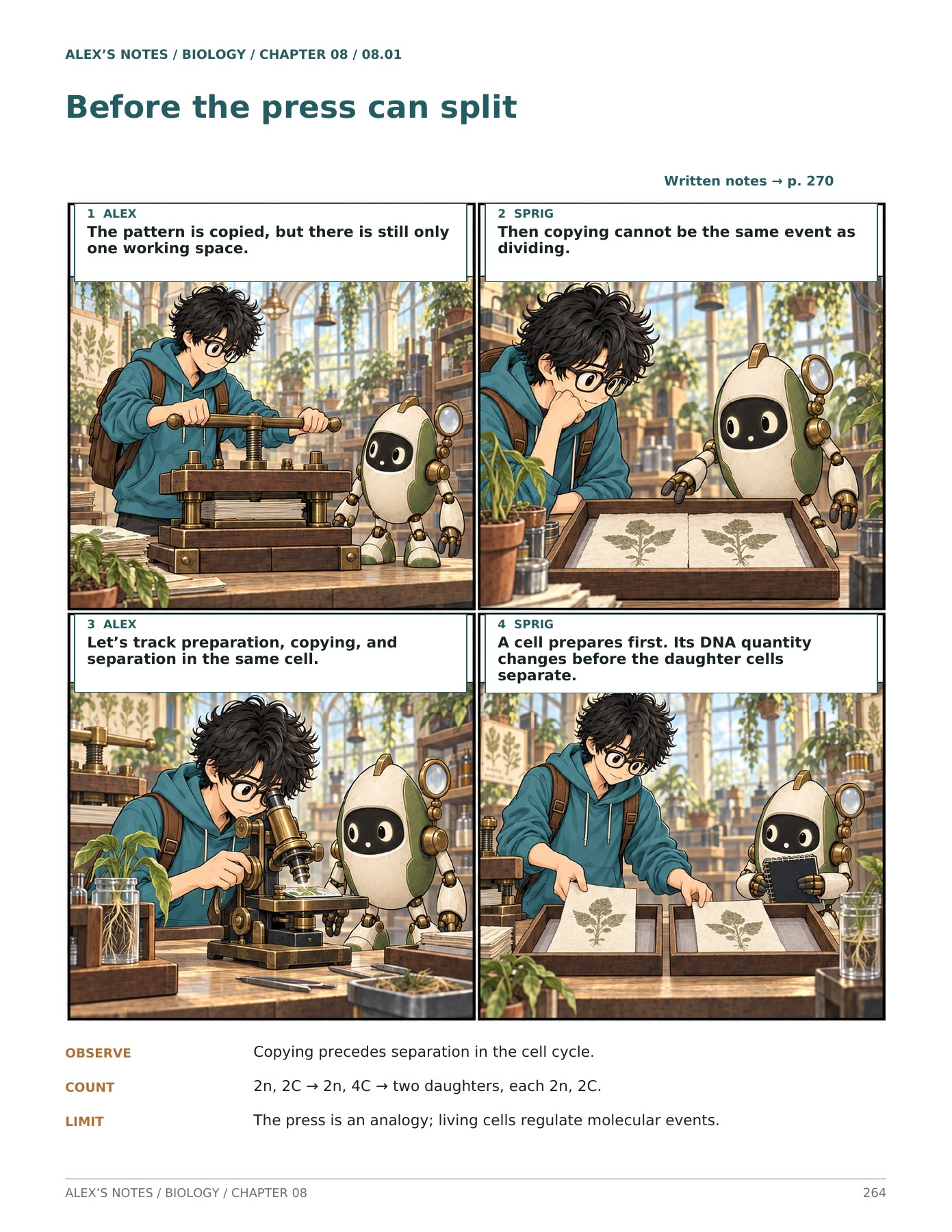
Chapter 08
Track DNA content and chromosome number within a stated boundary. Explain mitosis, cytokinesis, and checkpoint control. Distinguish division, separation, and survival when interpreting cell data.
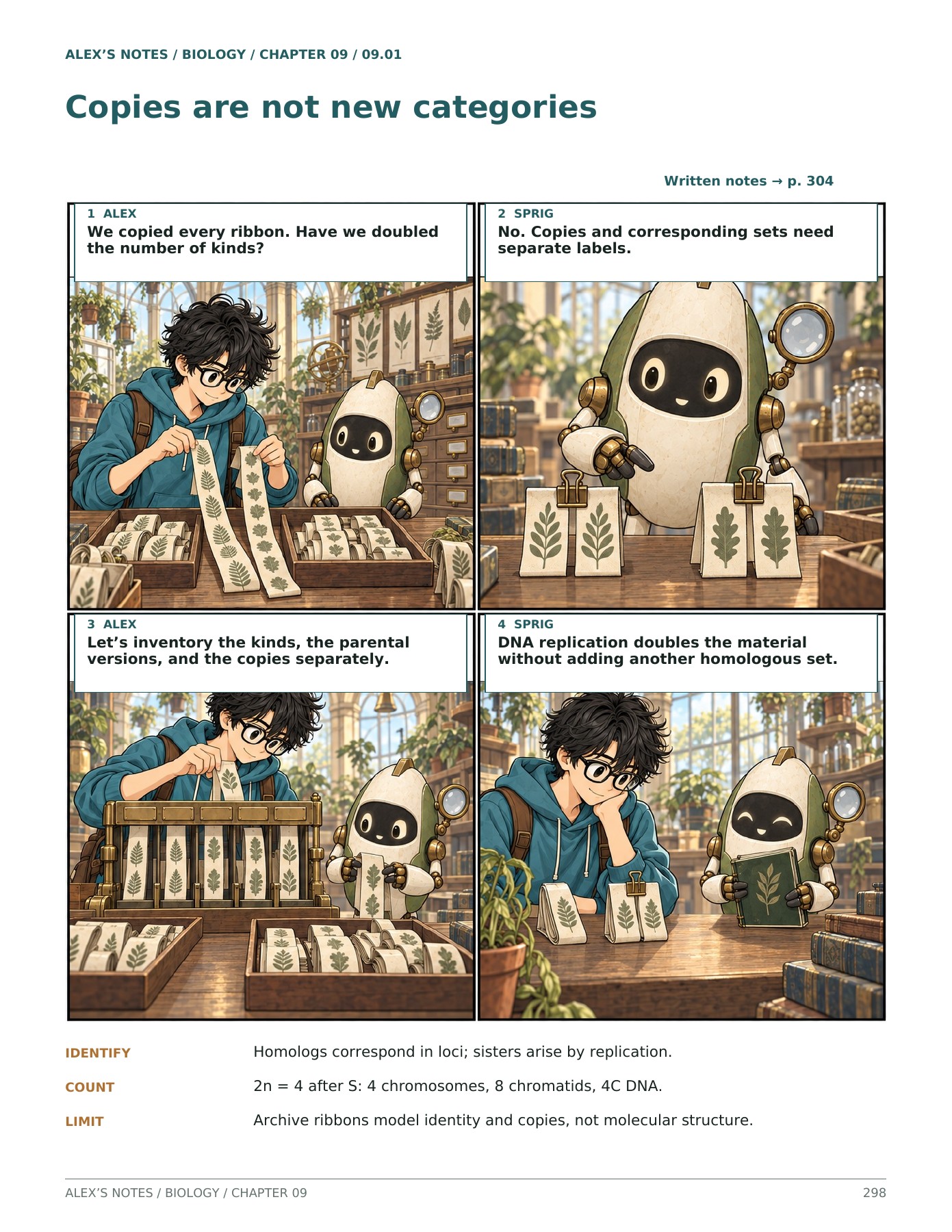
Chapter 09
Distinguish homologs, sisters, ploidy, and DNA quantity. Trace meiotic divisions and the mechanisms that generate variation. Use product counts to test chromosome-separation models.
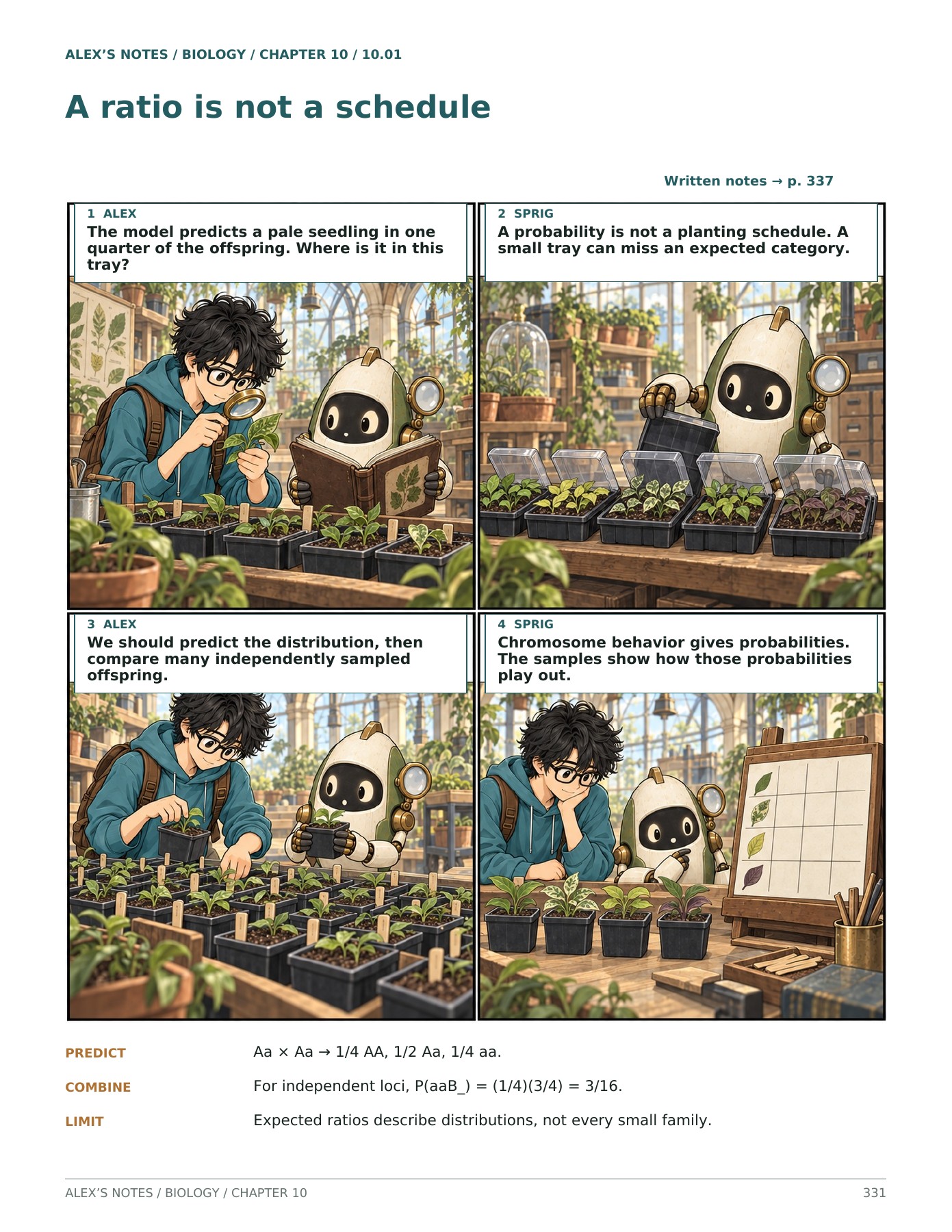
Chapter 10
Calculate inheritance probabilities under explicit assumptions. Test observed categories against a model and explain uncertainty. Distinguish linkage, sex-linked inheritance, organelle inheritance, and environmental effects.
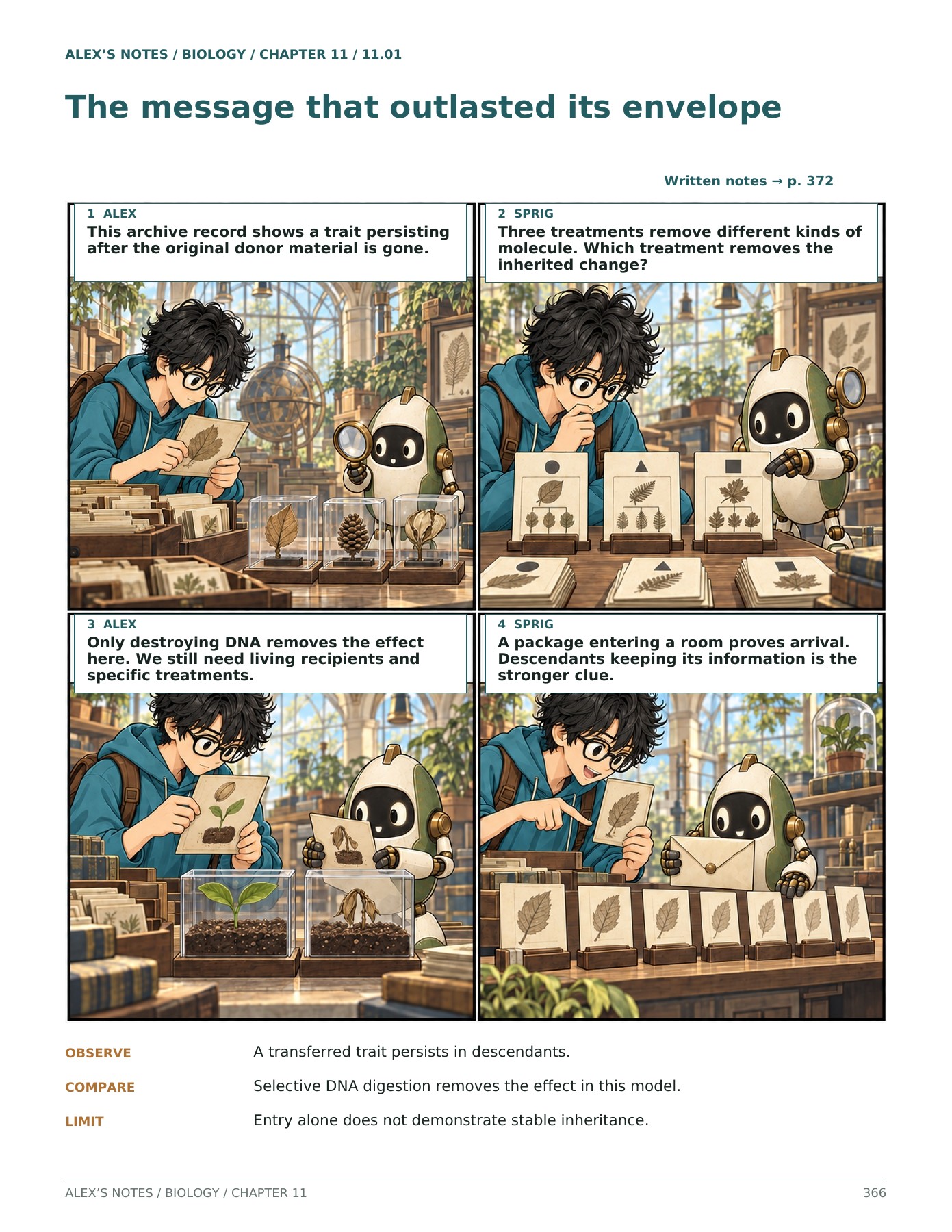
Chapter 11
Evaluate evidence for DNA inheritance and complementary strand structure. Trace replication and compare predictions of competing copying models. Explain how errors, repair, and DNA exchange affect inherited variation.
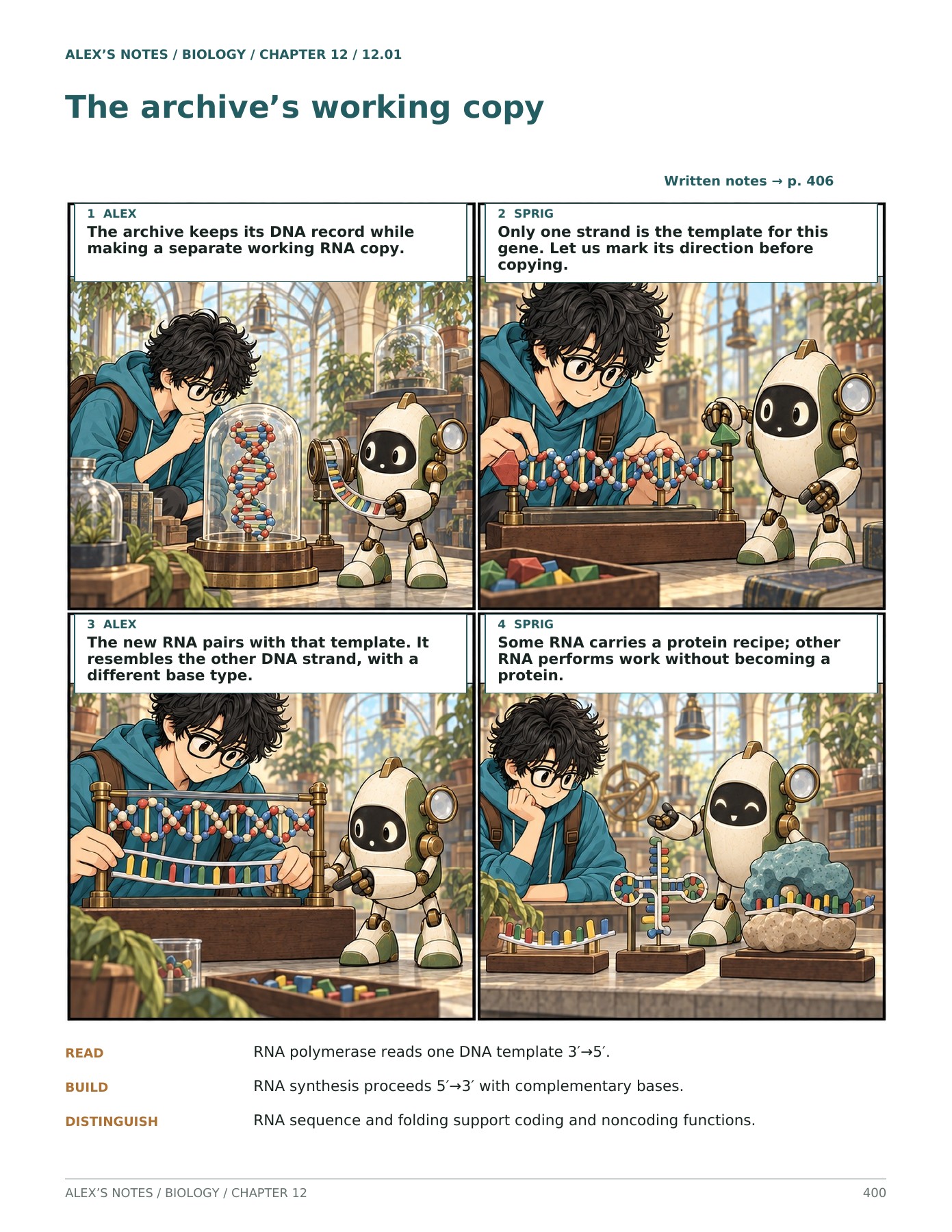
Chapter 12
Trace information through transcription, RNA processing, and translation. Connect protein production and location with cellular function. Predict consequences of sequence changes and reverse transcription.
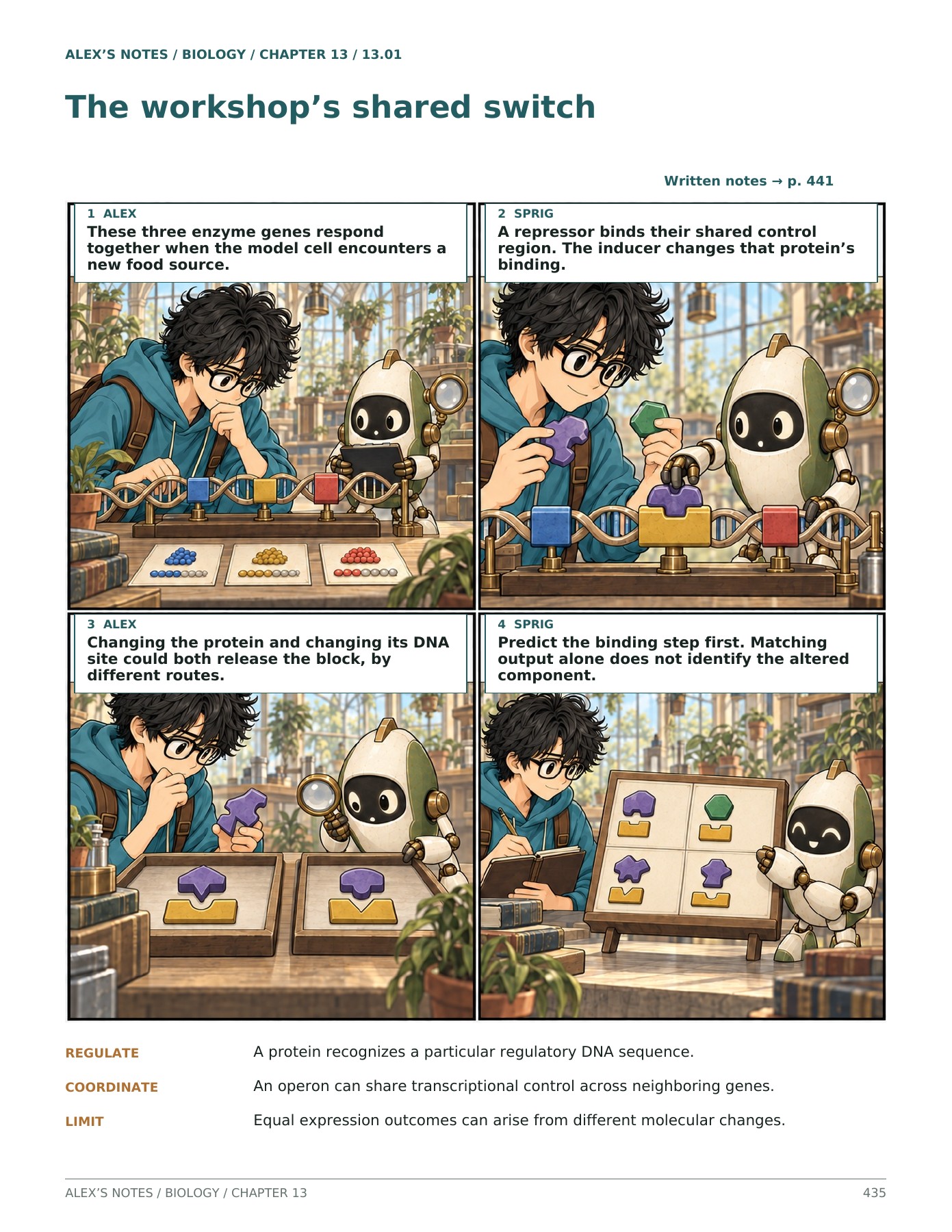
Chapter 13
Explain how DNA, chromatin, and regulatory molecules control expression. Connect differential expression with cell specialization and development. Interpret biotechnology experiments using controls and causal reasoning.
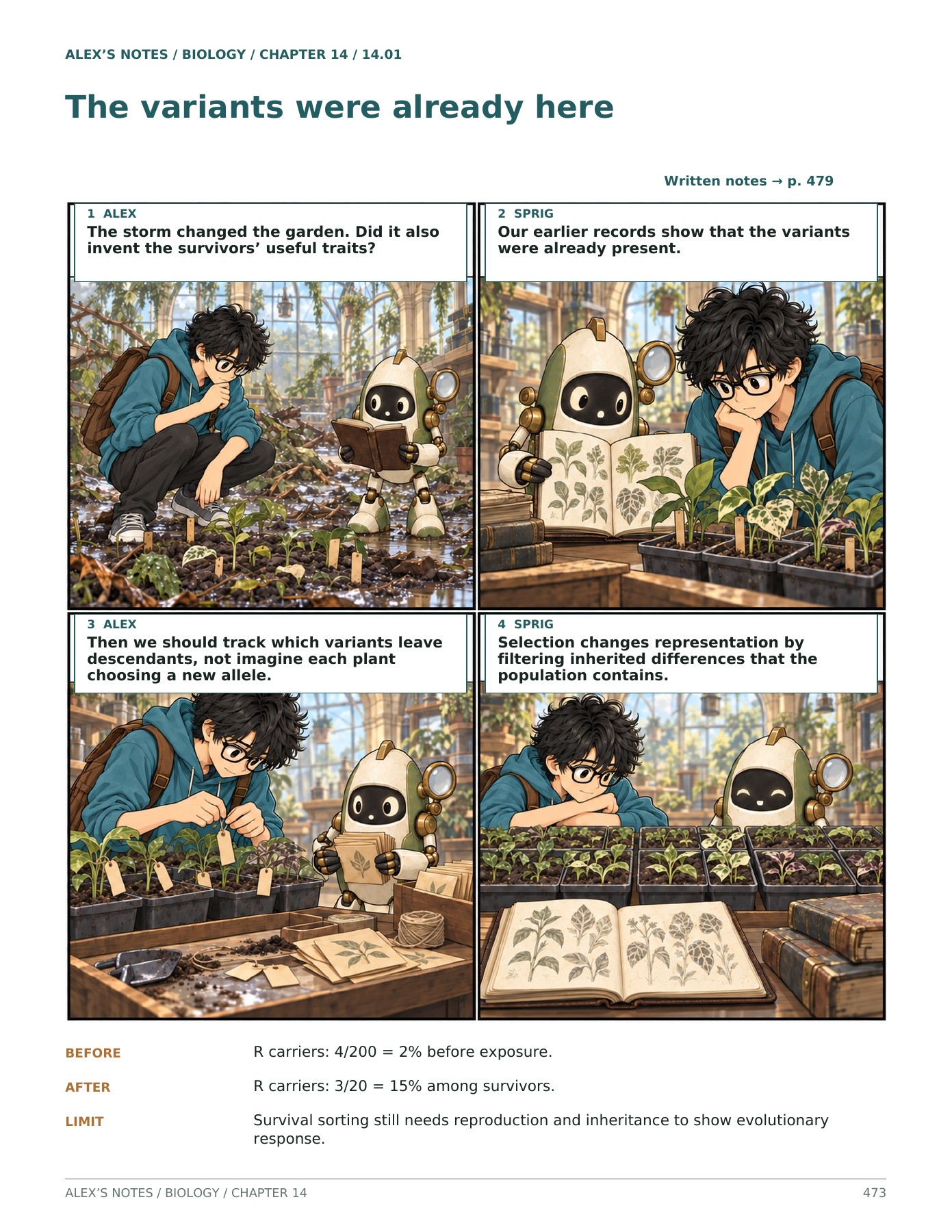
Chapter 14
Separate the origin of variation from selection among variants. Use survival and reproduction data to compare contextual fitness. Explain resistance and diversity with heritable mechanisms and model limits.
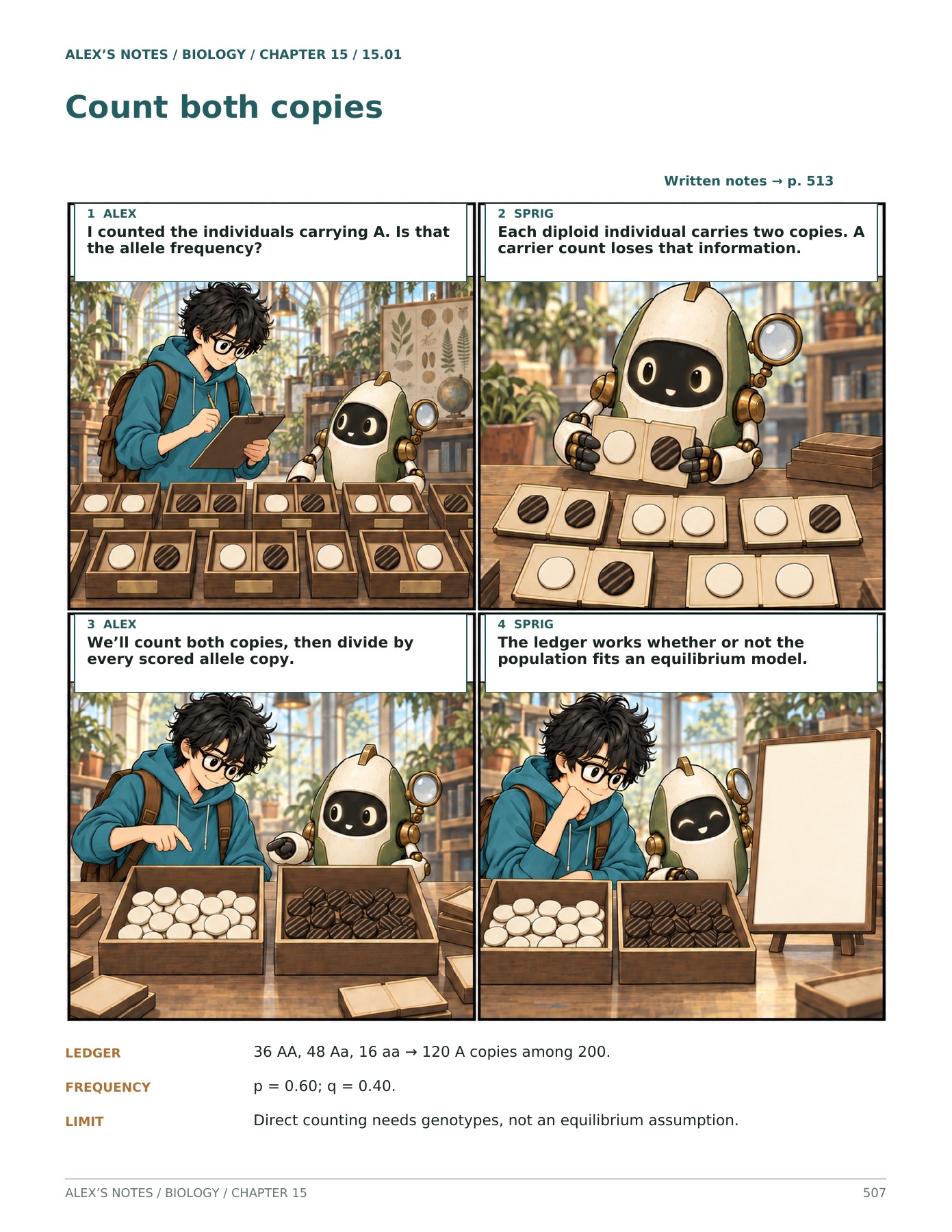
Chapter 15
Calculate allele frequencies without assuming equilibrium. Use Hardy–Weinberg as a bounded null model. Distinguish selection, mutation, drift, and gene flow using evidence.
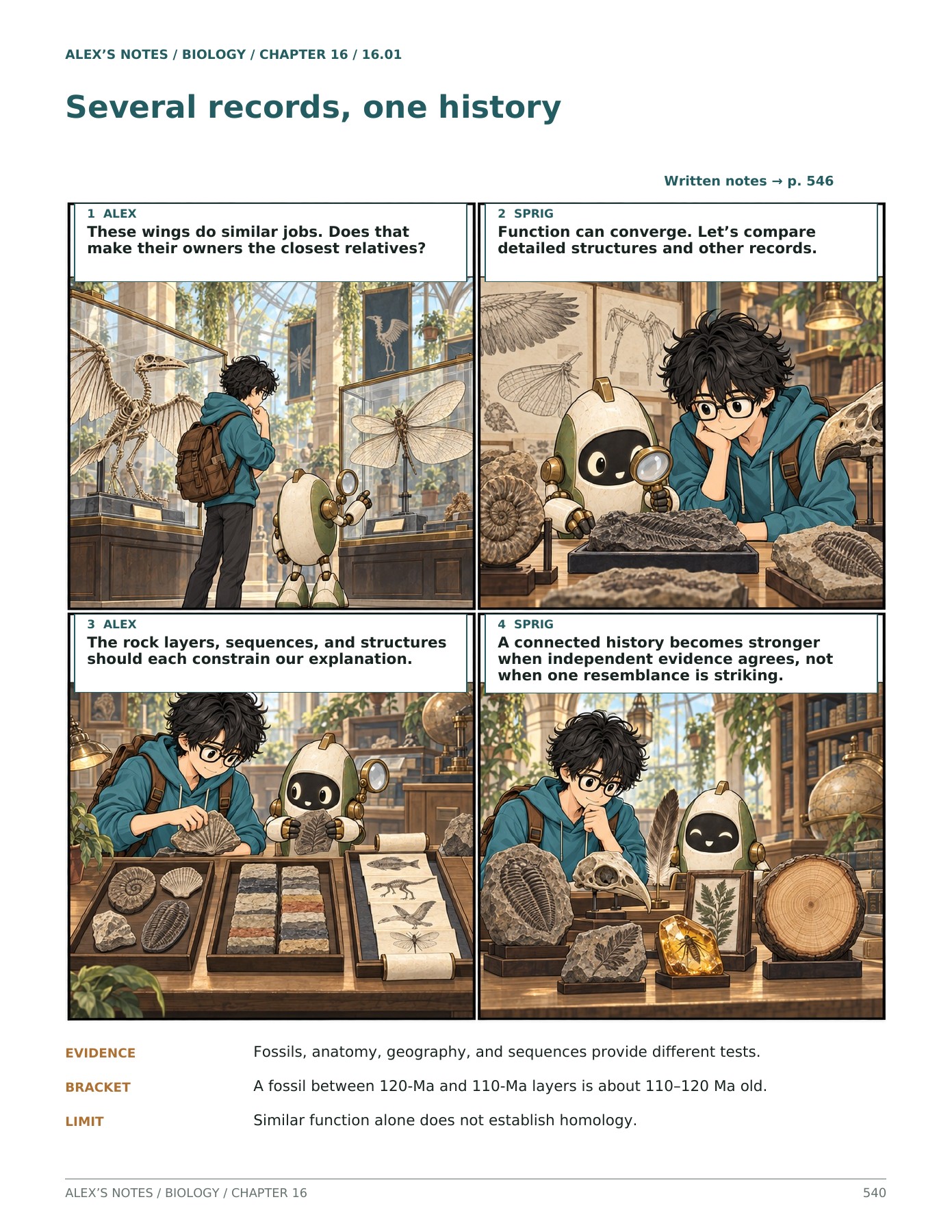
Chapter 16
Combine evidence for evolution and shared ancestry. Read, construct, and revise phylogenetic hypotheses. Explain reproductive isolation and evaluate bounded models of early life.
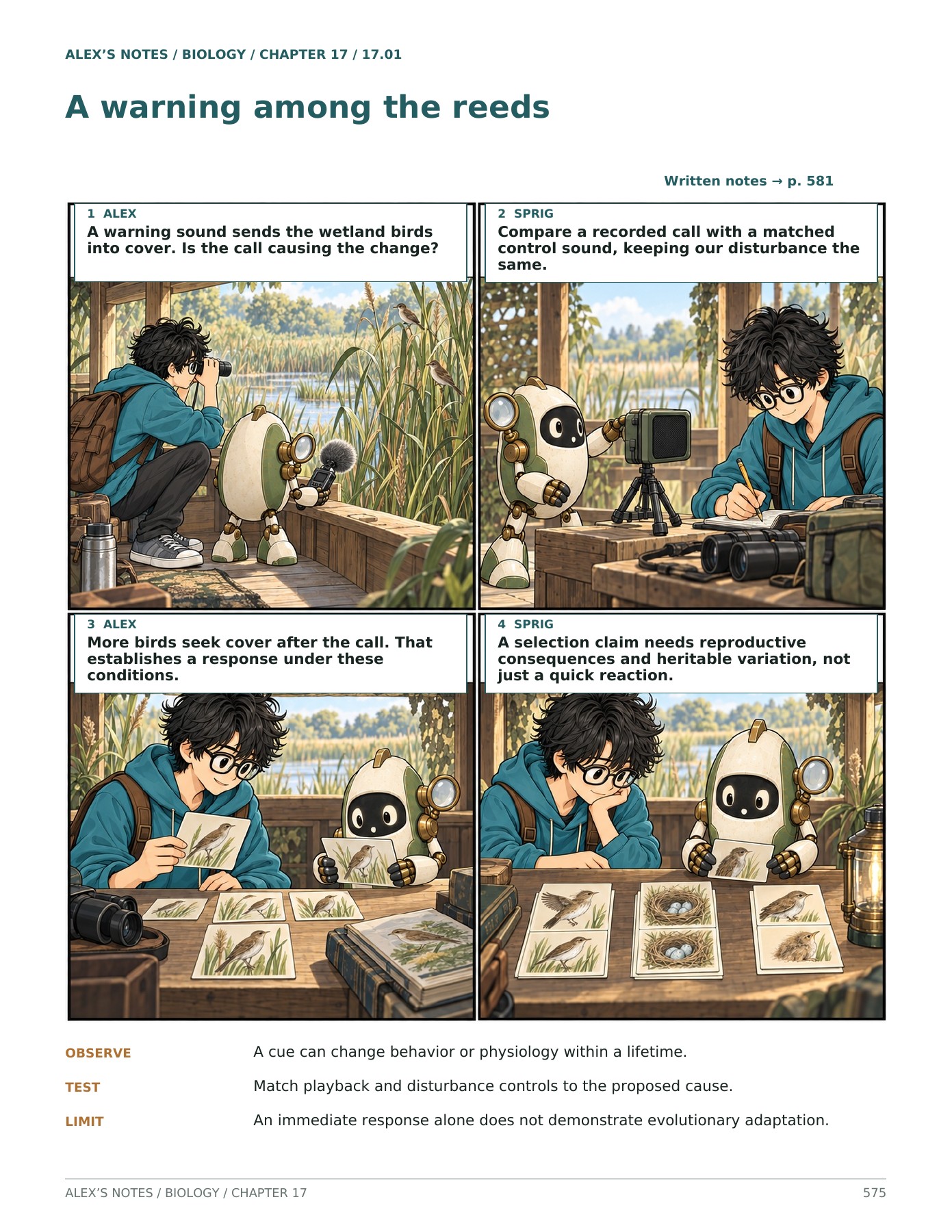
Chapter 17
Estimate population size and predict growth under stated assumptions. Explain how responses and species interactions affect fitness. Use diversity and food-web evidence to explain community patterns.
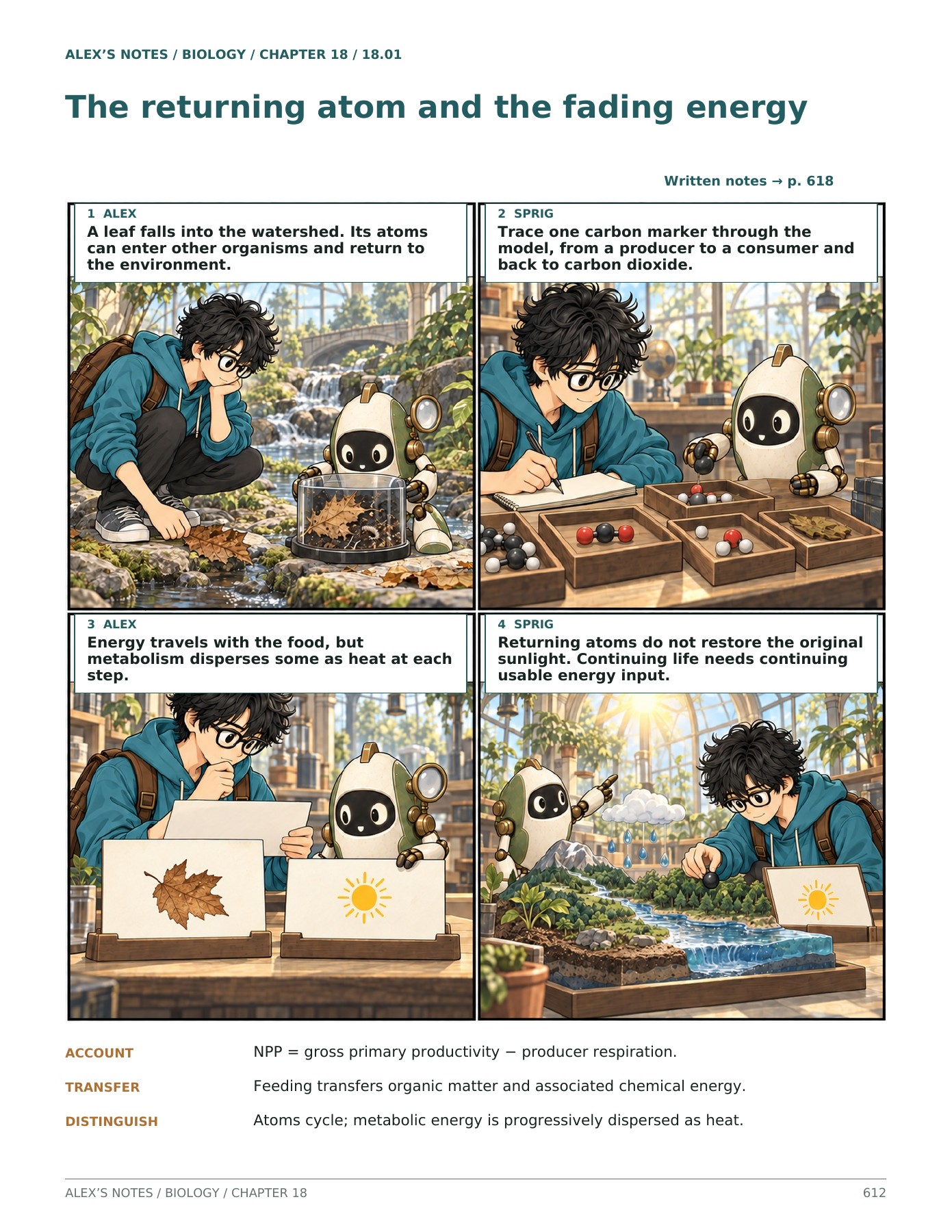
Chapter 18
Account for energy transfer and matter cycling across biological scales. Connect biodiversity, species interactions, and ecosystem responses. Evaluate consequences of environmental change using mechanisms and evidence.
No chapters match that search. Try another topic or choose “All topics.”
The complete course
The full collection and separate chapter PDFs, together in one download purchase.
Get AP Biology · 14.99 USDSecure checkout and digital delivery through Payhip.
Read the free PDF sampler
No checkout required.